Medium: Oil on panel
Dimensions: 22.5 x 27.5 cm
Signature: Signed lower left
Period of execution: c. 1868-1959
Price: ¥18,800
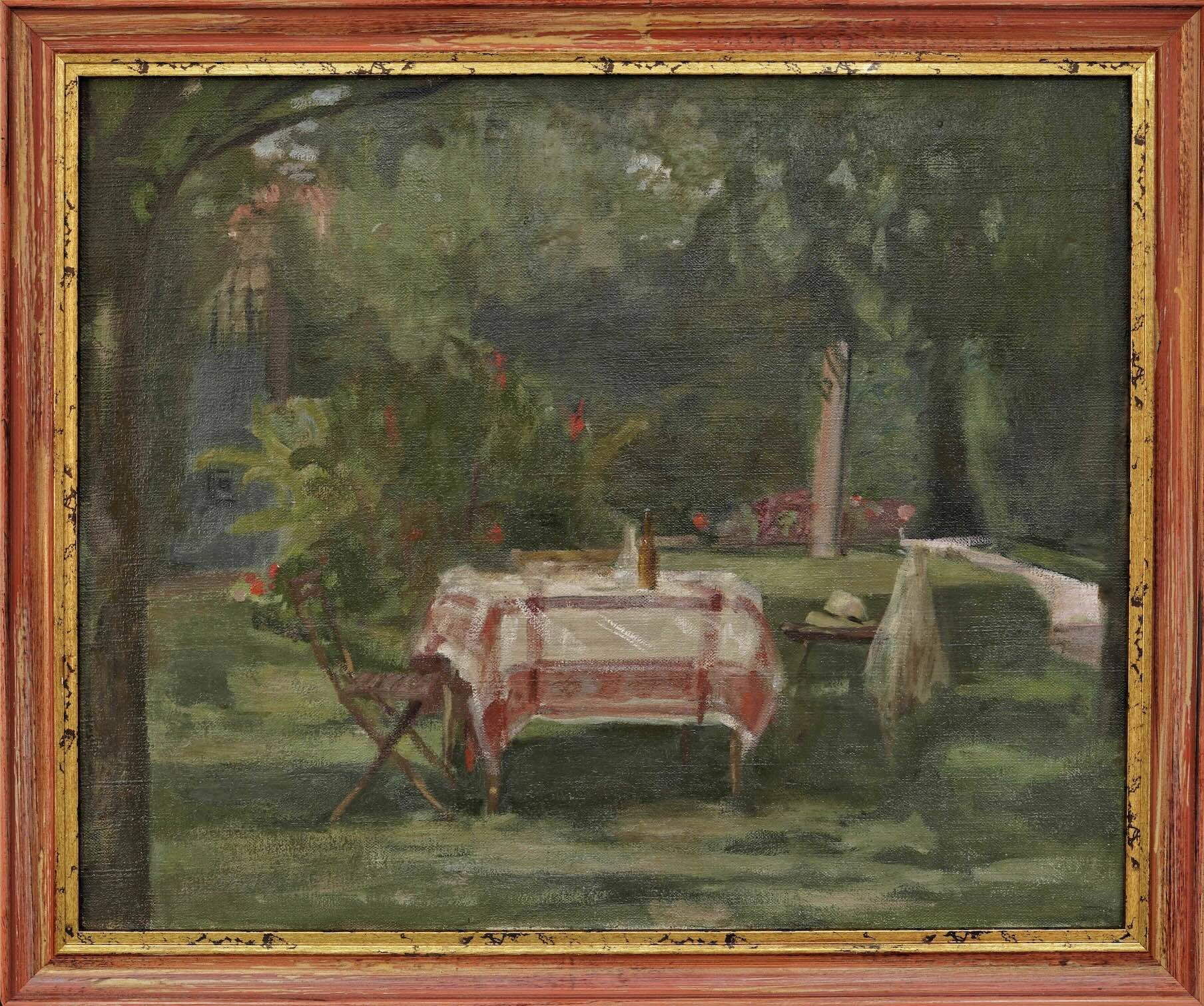
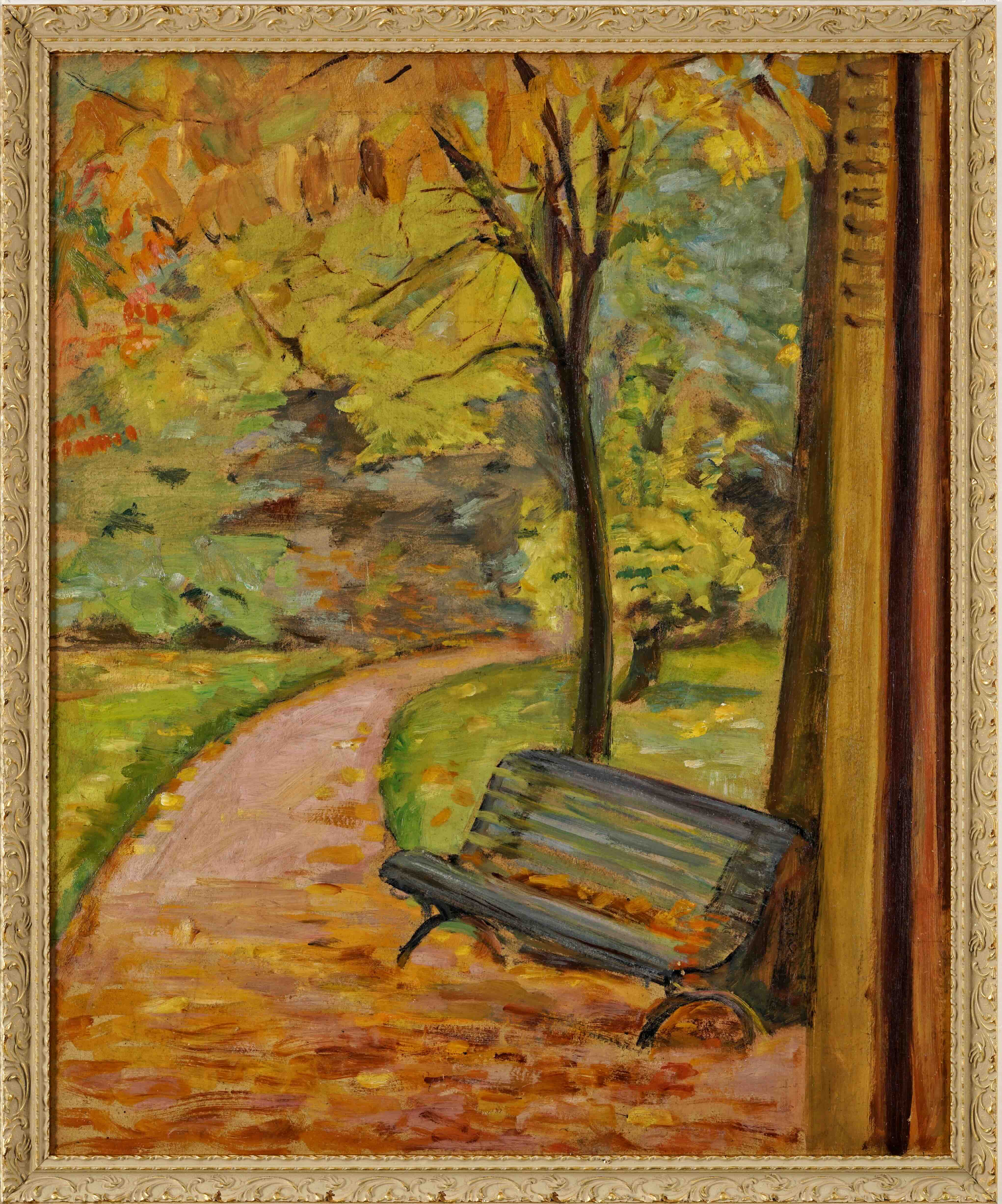
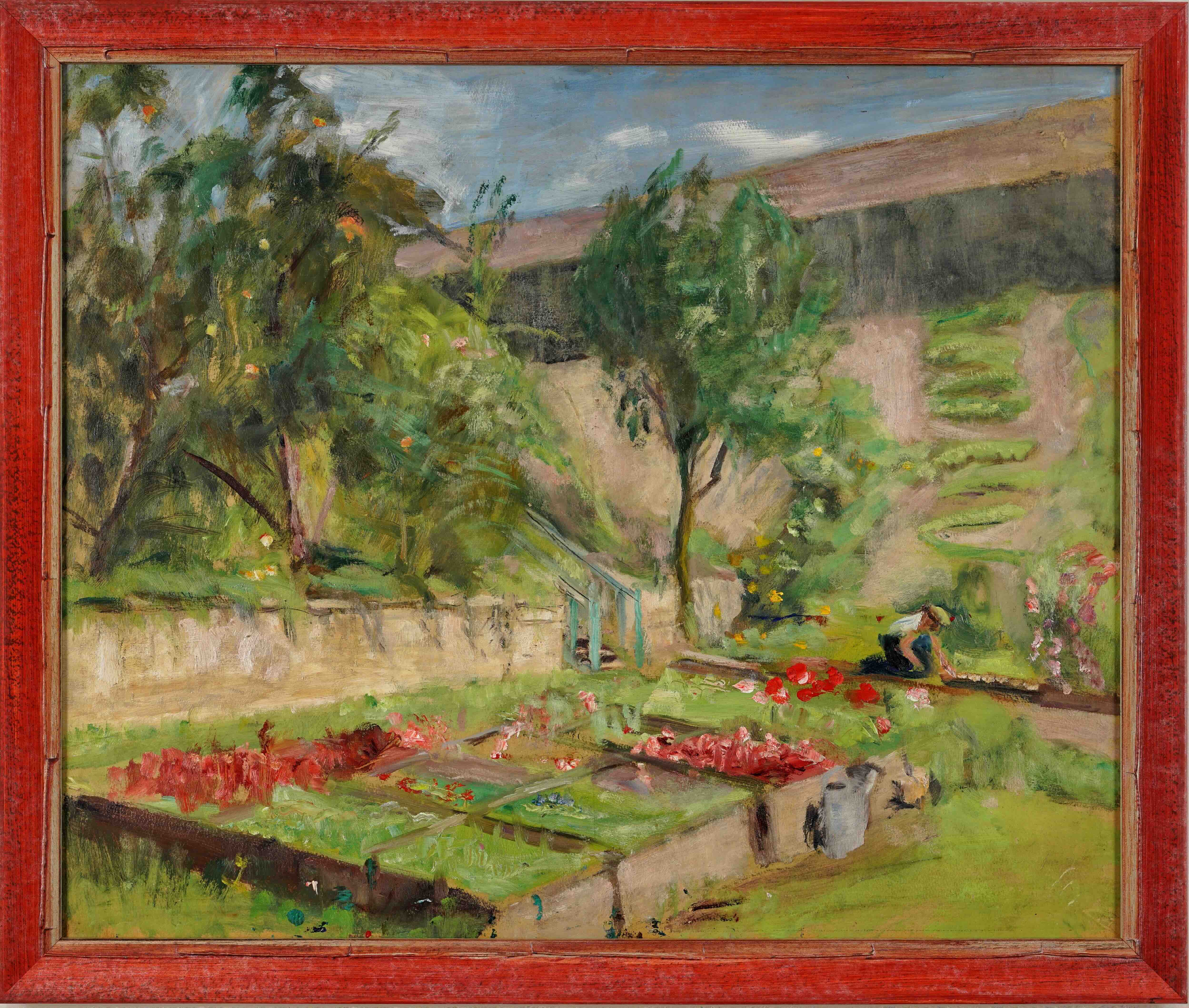
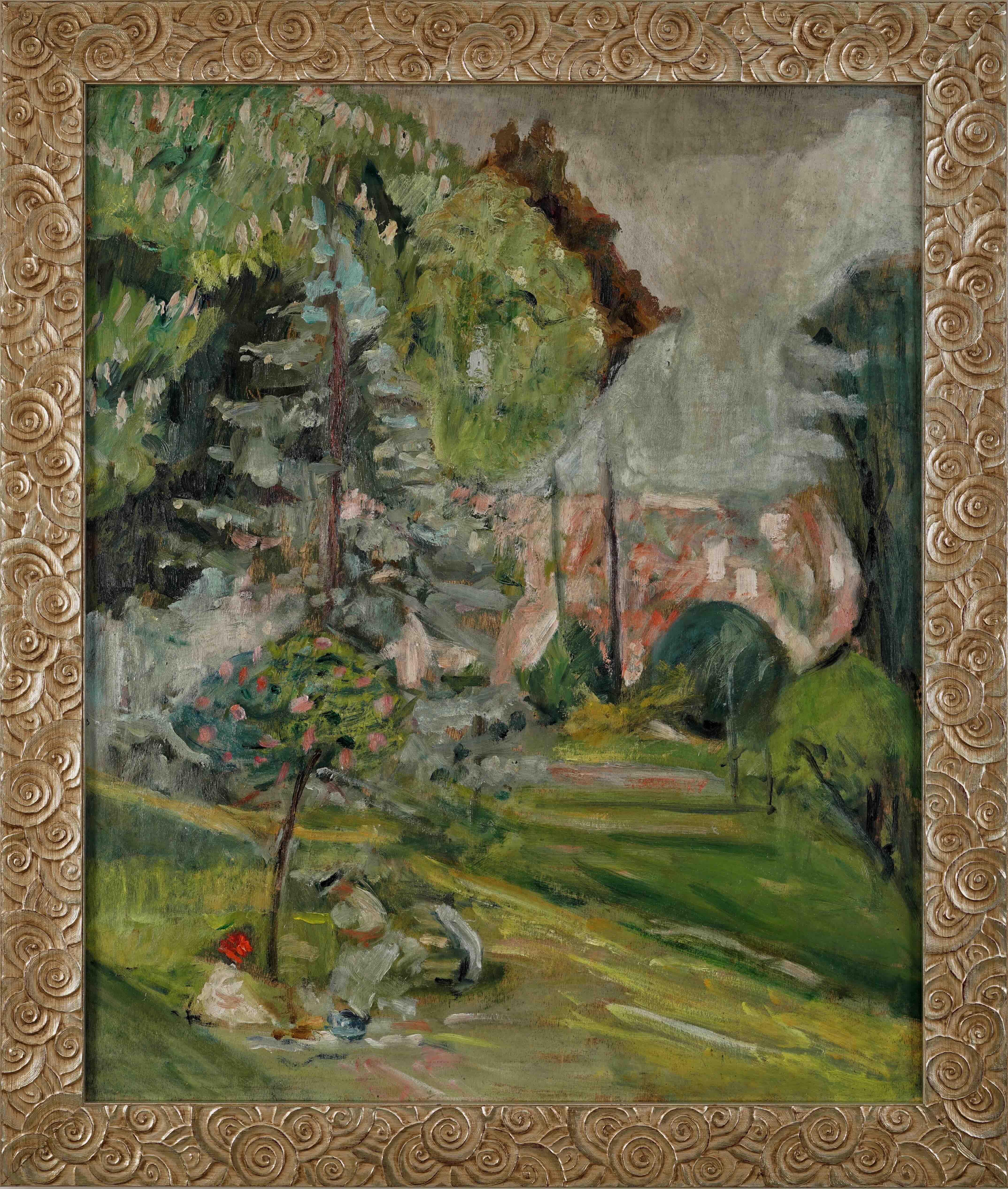
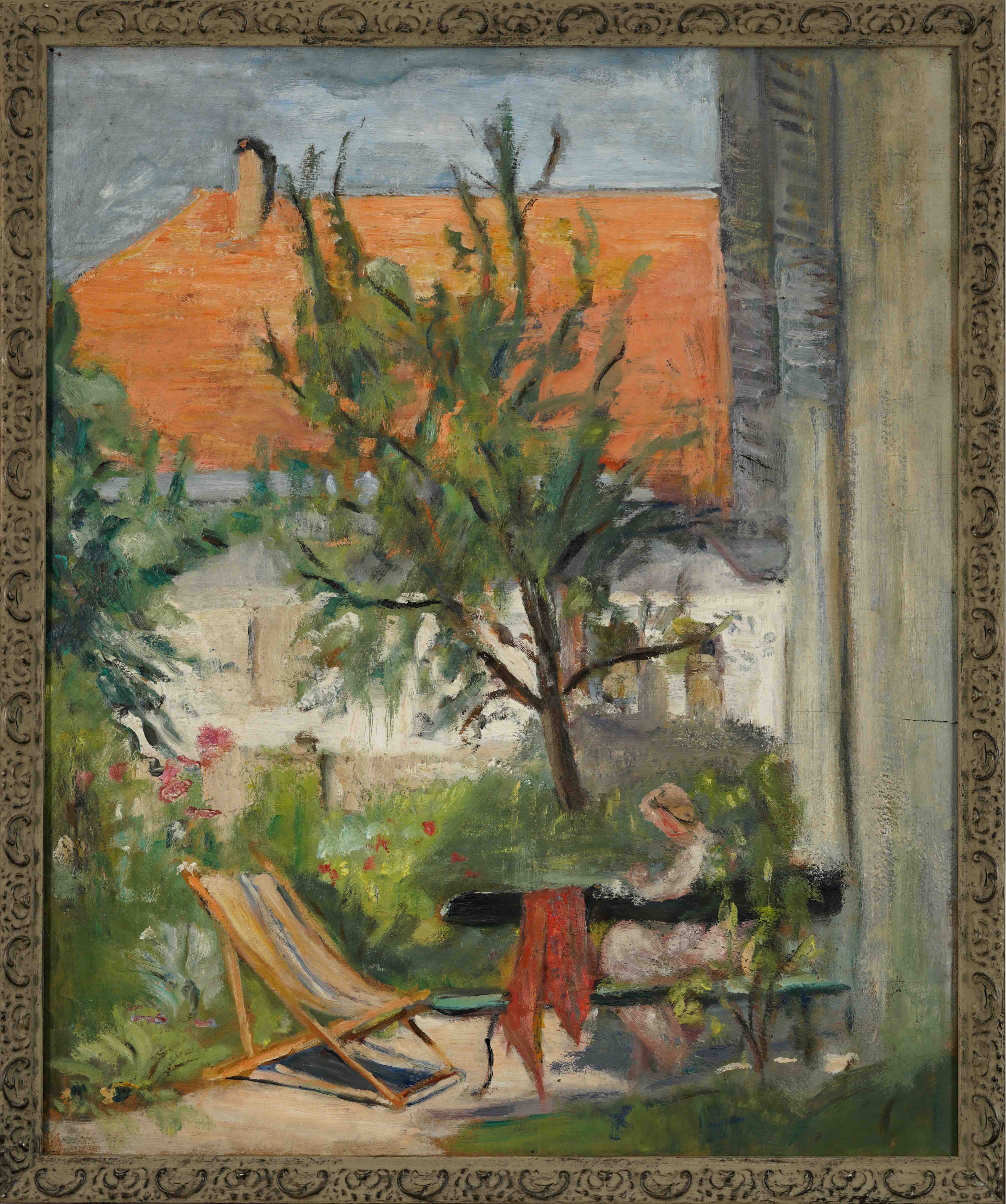
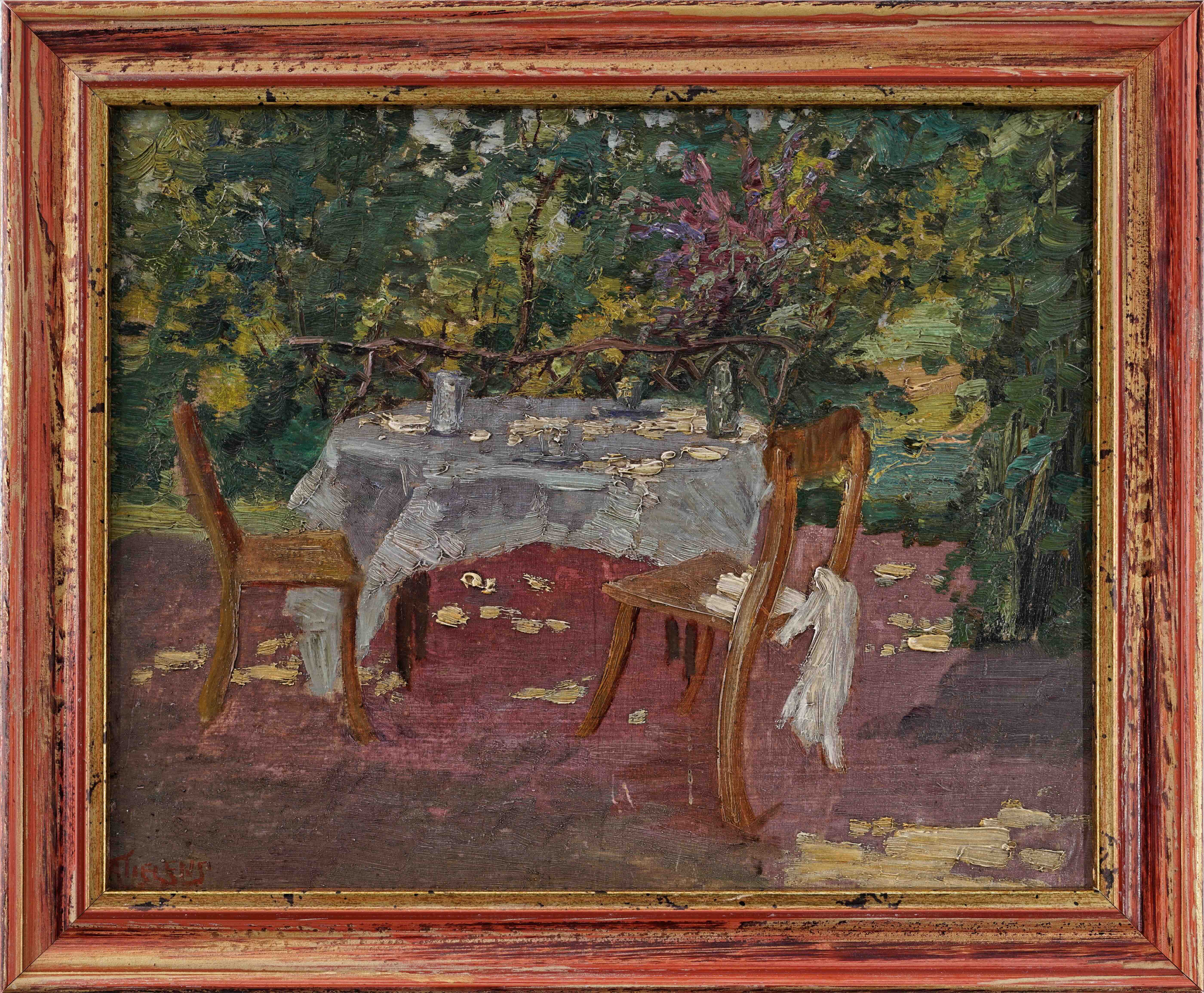
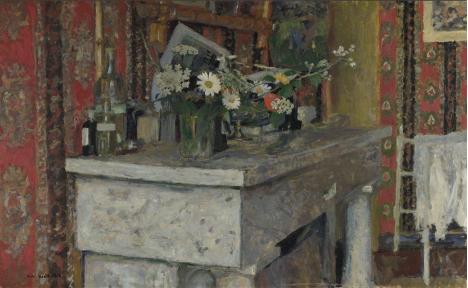
This intimate garden scene shows a table prepared for an outdoor meal, framed by two empty chairs and surrounded by dense foliage. The laid table suggests an imminent gathering, while the absence of figures gives the scene a quiet, expectant atmosphere.Tielens’s handling of paint recalls Édouard Vuillard, particularly The Mantelpiece (La Cheminée) in the National Gallery, London (Fig. 1). Drawing on the Impressionist tradition of en plein air painting, Tielens builds the composition through small, densely applied strokes rather than firm outlines. Leaves, furniture, tablecloth, and ground are formed through overlapping touches of colour, softening the boundaries between individual objects and giving the painted surface a rich, almost tapestry-like quality. Depth is created largely through changes in colour and tone rather than precise linear perspective. Where Vuillard often works with a more muted palette suited to the enclosed atmosphere of his interiors, Tielens uses brighter colours to convey the effects of outdoor light. Golden yellows enliven the foliage, warm ochres and terracotta tones describe the ground, and the white tablecloth catches the strongest areas of sunlight. The surrounding greens range from deep, shaded tones to brighter yellow-greens where light passes through the canopy. Through these contrasts, Tielens captures the shifting appearance of a garden under afternoon sunlight while preserving the intimacy and stillness of the scene.
Alexandre Tielens (1868–1959) was a Belgian painter celebrated for his landscapes, picturesque townscapes, floral compositions, and still lifes. Trained at the Brussels Academy, he developed a distinctive style that combined firm, realistic draftsmanship with Impressionist atmospheric sensitivity and colour harmonies. His technique was characterised by generous paint application and sophisticated handling of light effects, creating works notable for their intimacy and subtle colour relationships. Tielens achieved significant recognition during his career. In 1901, Queen Marie-Henriette of Belgium acquired two of his works at the Spa Salon, marking an important moment of royal patronage. He subsequently became a favoured painter of the Duke of Arenberg, securing his position within elite collecting circles. Beyond easel painting, Tielens demonstrated considerable versatility, executing important mural commissions, including a triptych for the "French School" in Brussels, showcasing his command of both decorative and fine art practices.



 CN
CN