About the Artwork
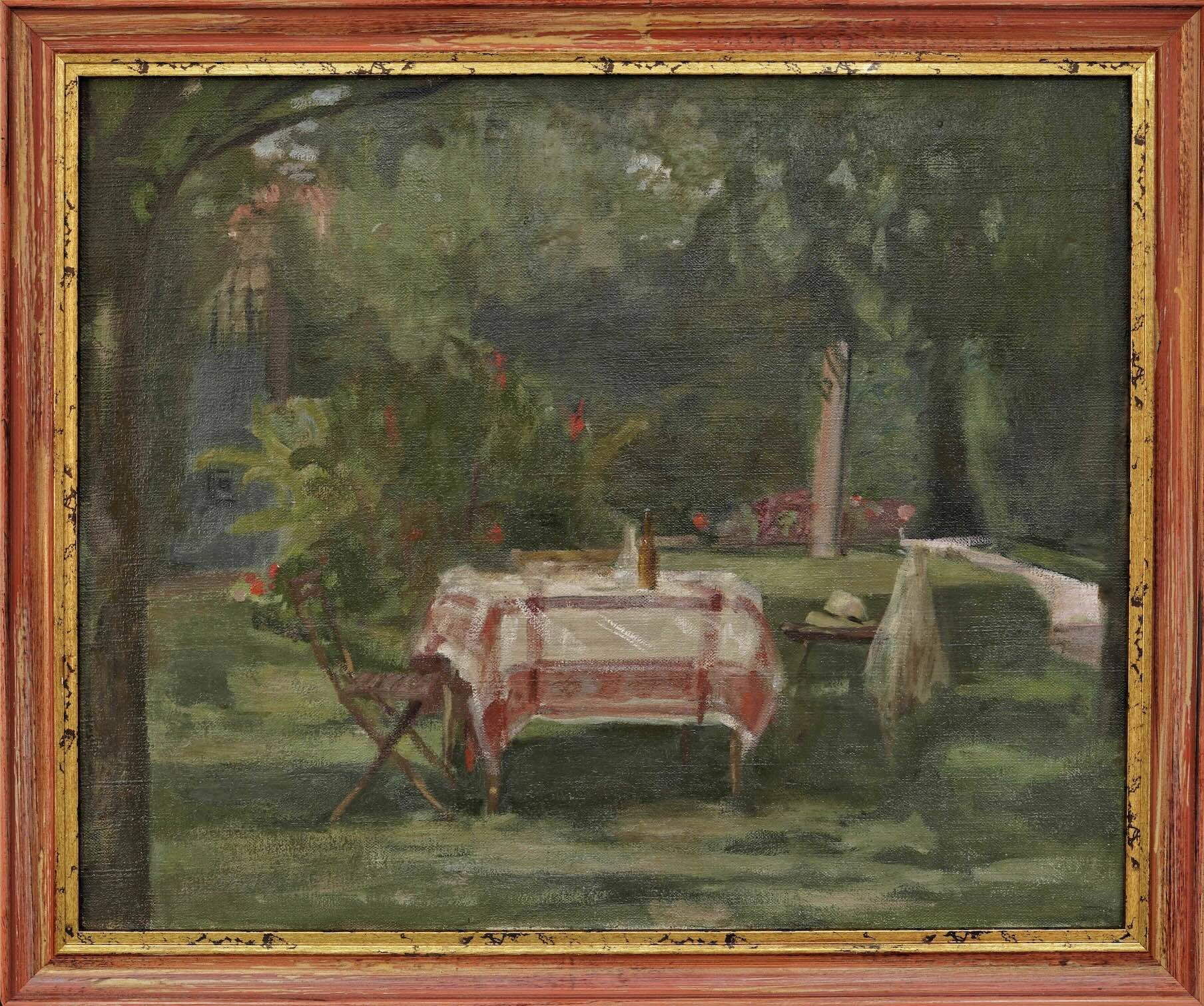
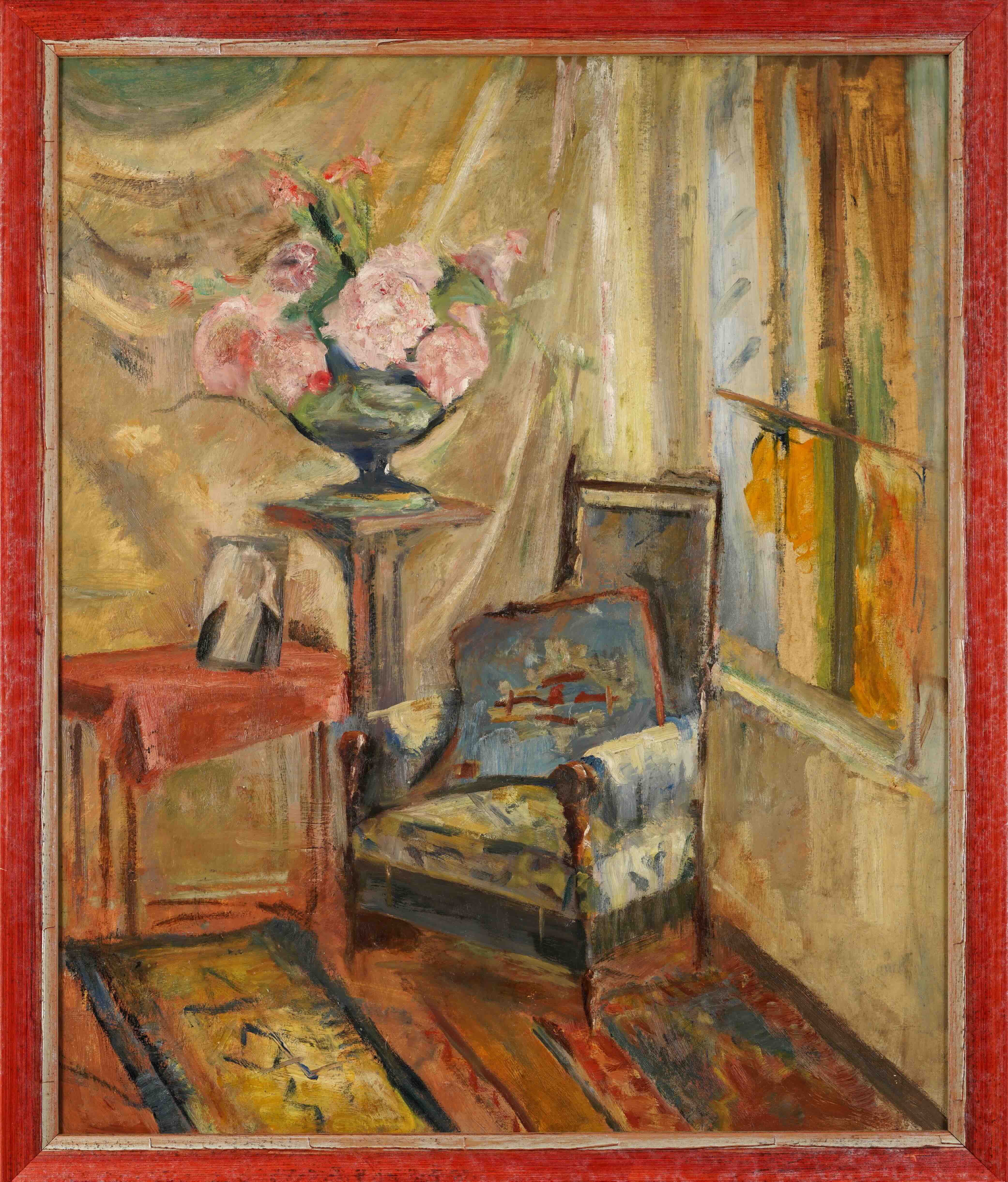
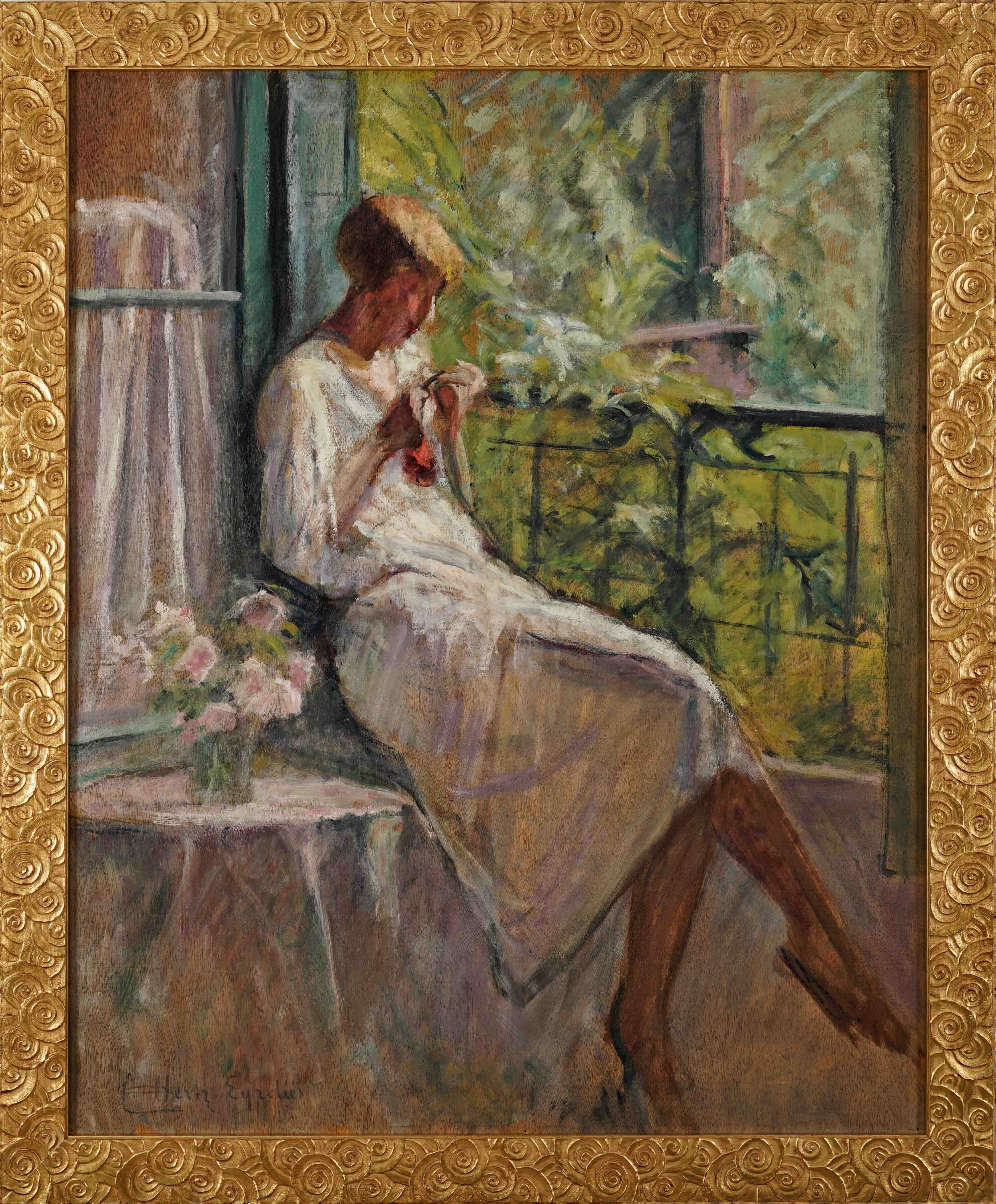
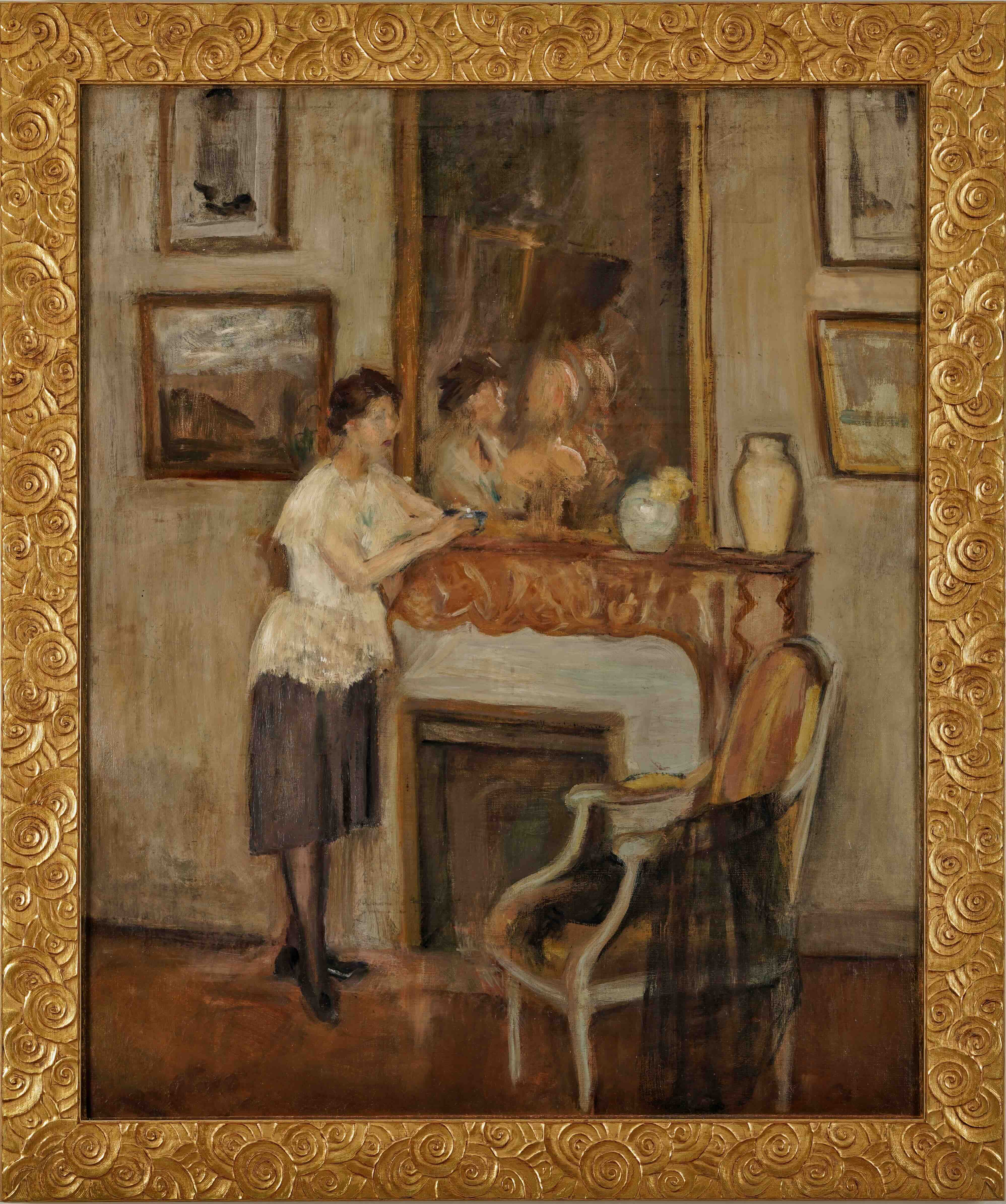
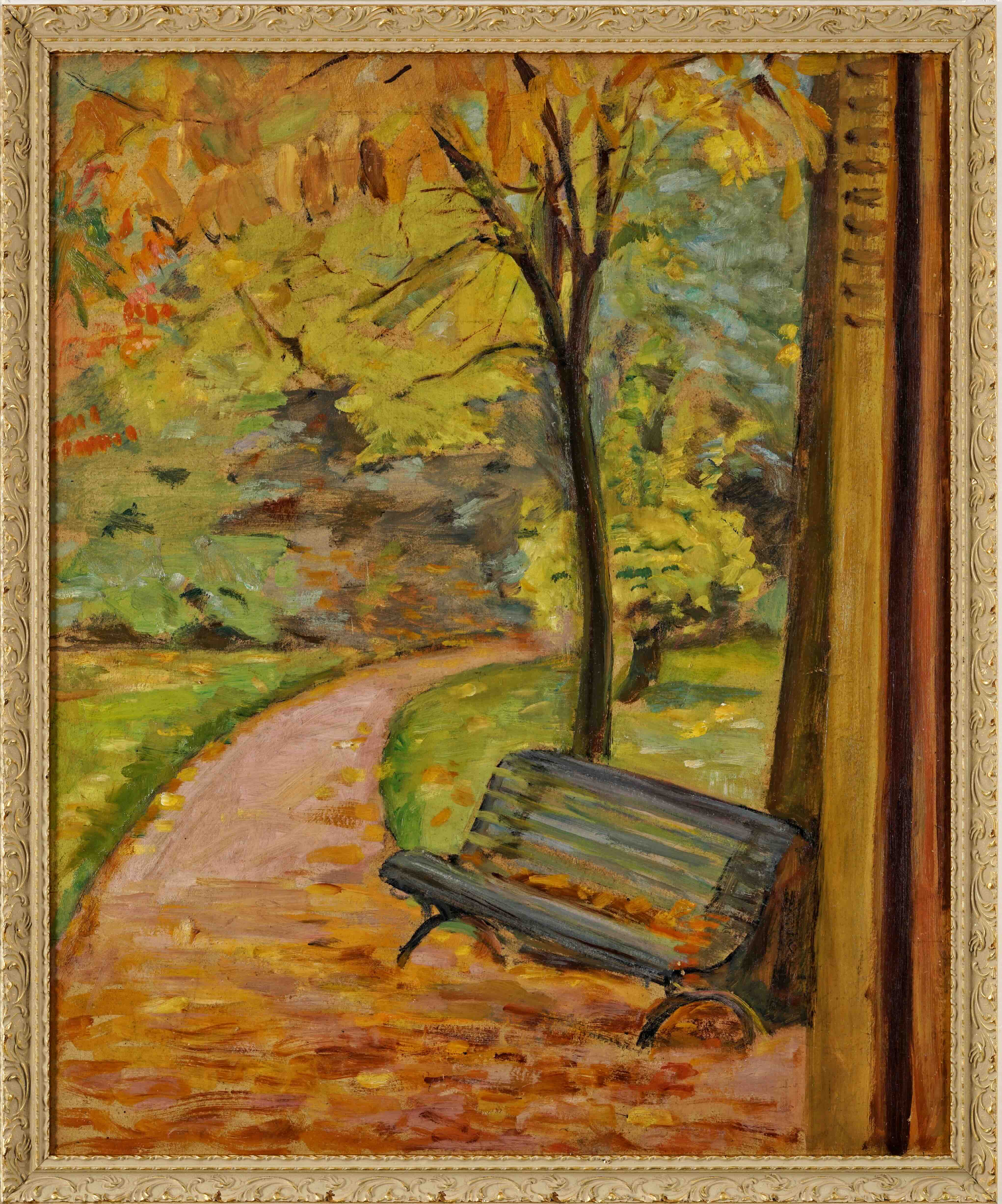
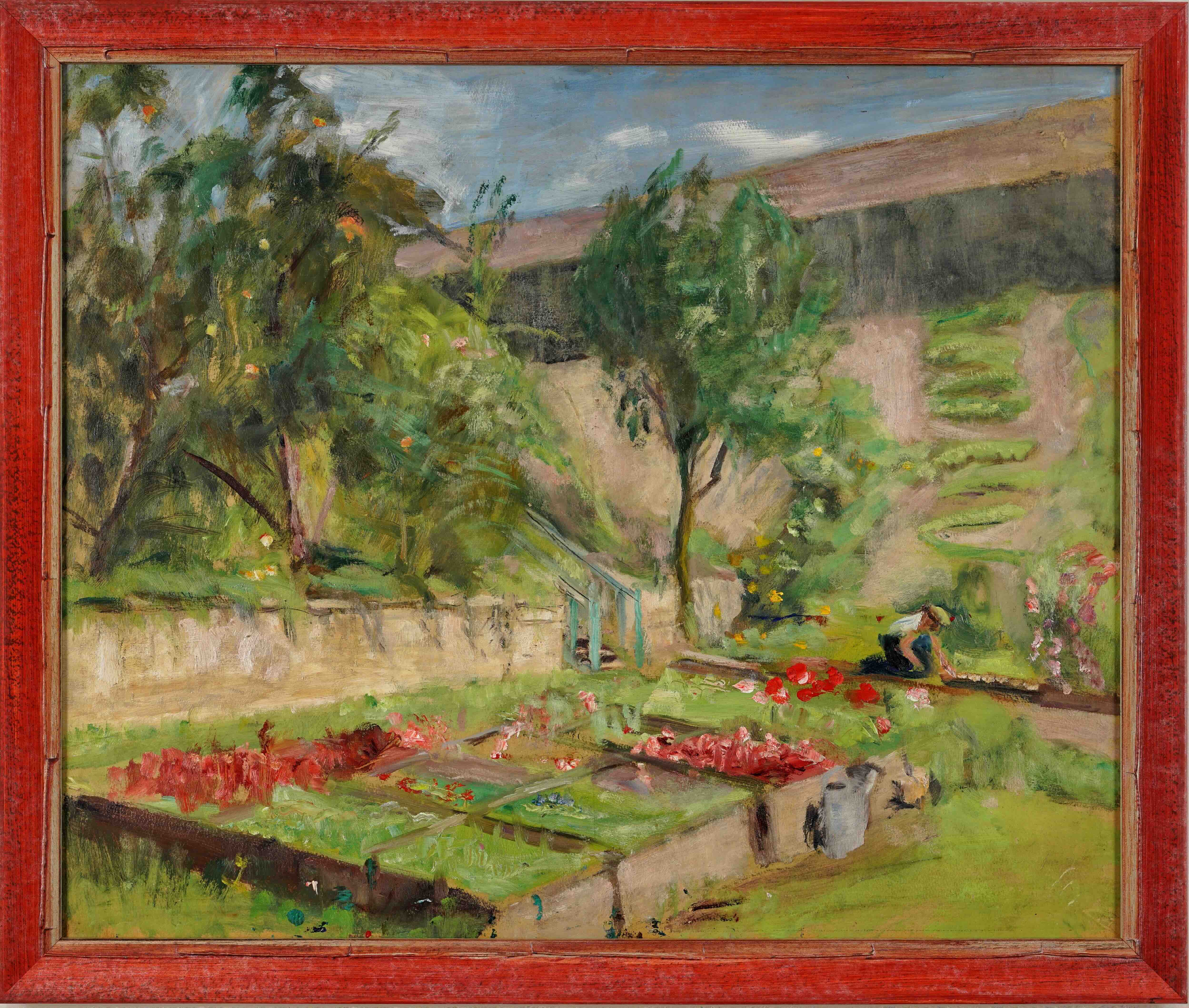
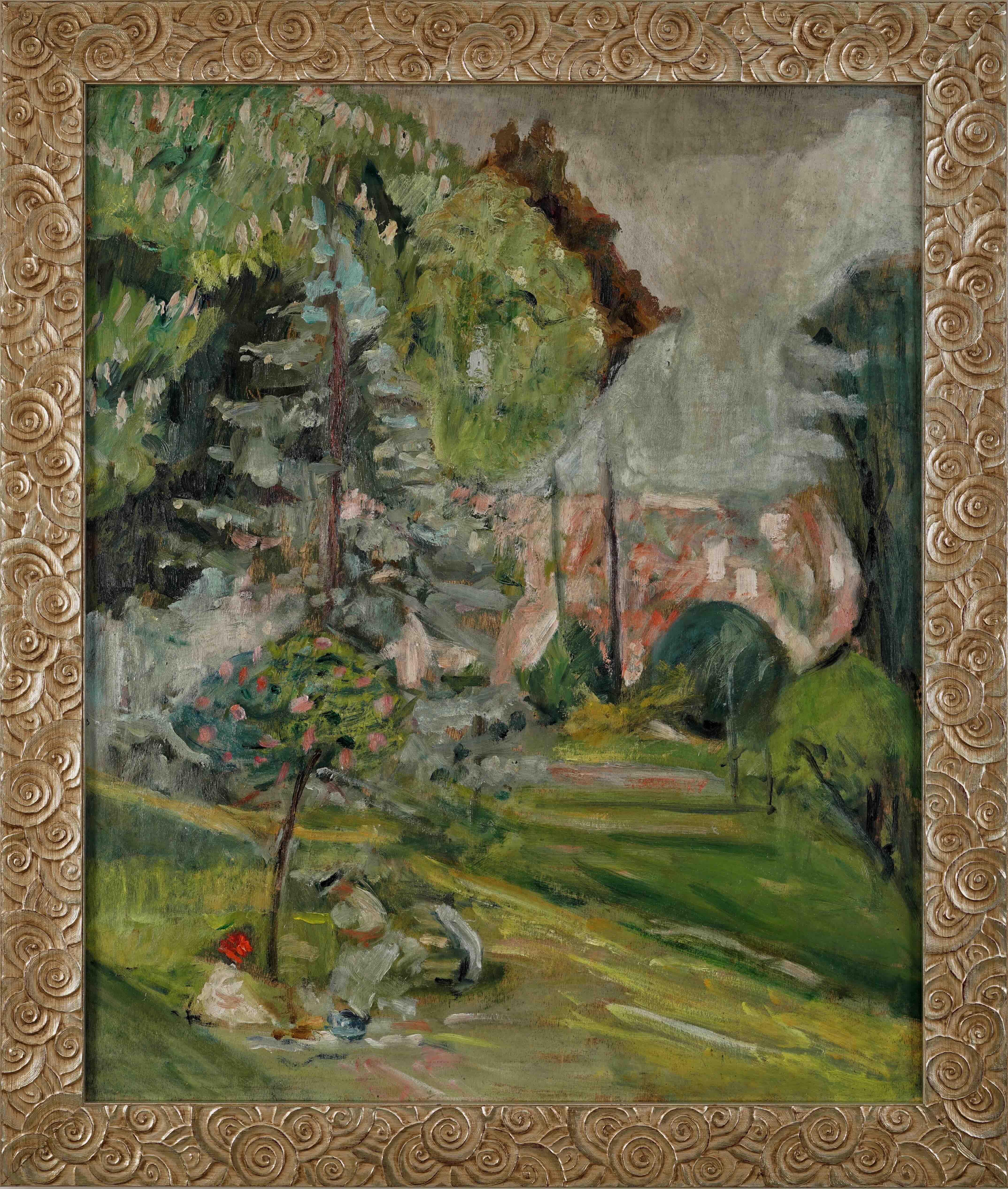
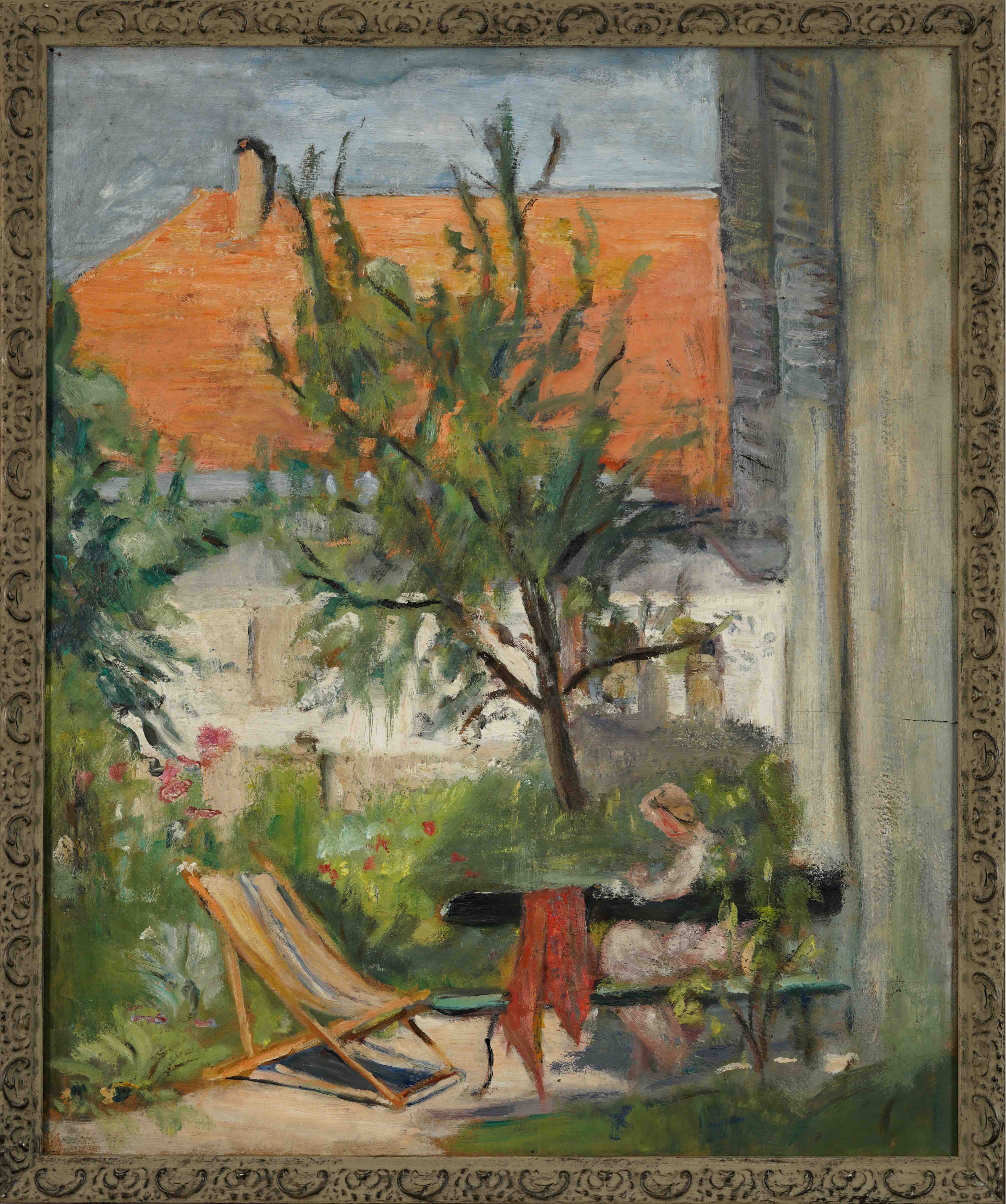
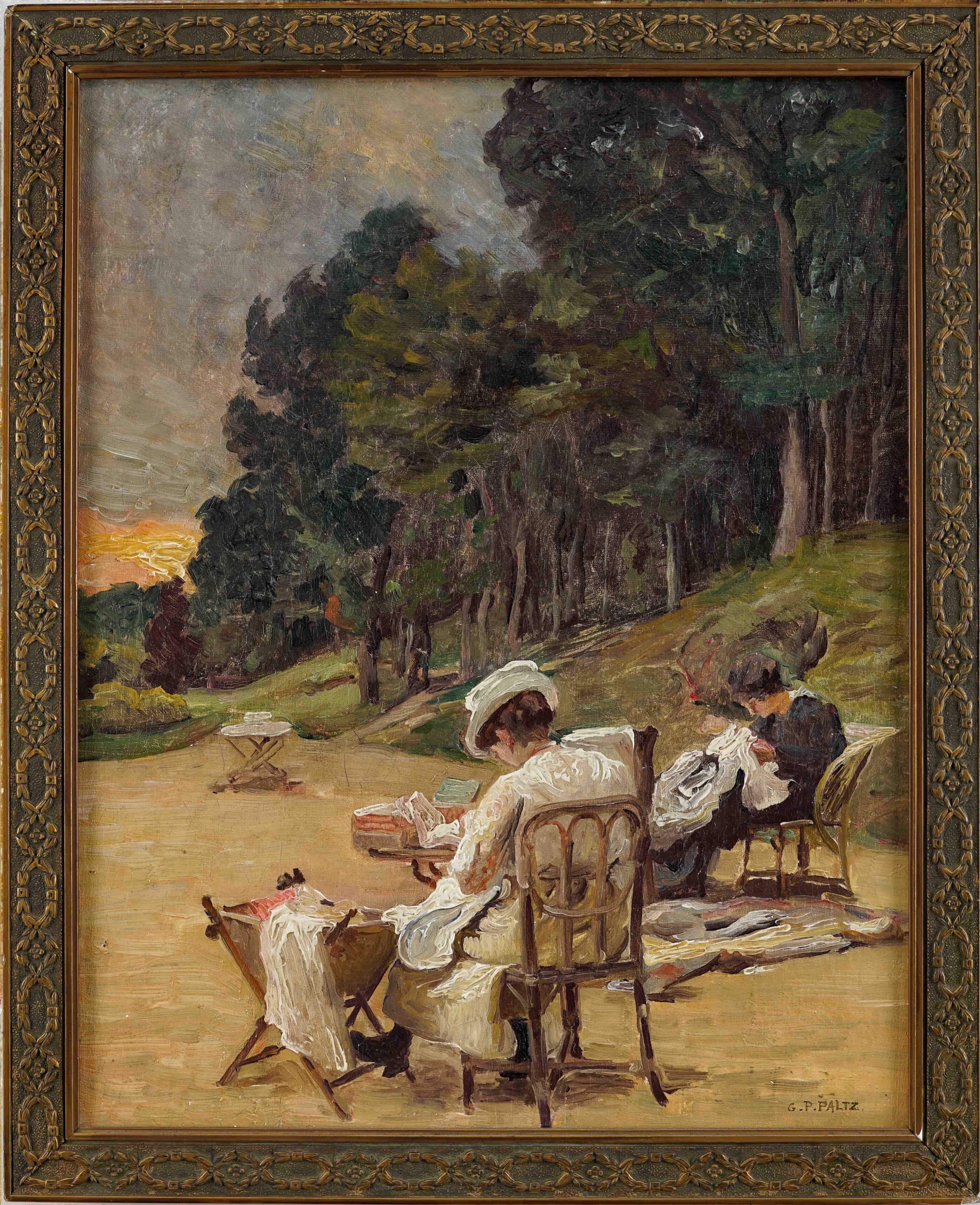
This intimate scene shows two women engaged in needlework at the edge of a wooded landscape, illuminated by the warm light of late afternoon. Seated with their work positioned to catch the fading sun, the figures appear absorbed in the quiet task of darning or embroidery. Their placement between the open clearing and the darker woodland beyond gives the composition a gentle balance between domestic activity and the natural setting. Much of the painting’s atmosphere depends on Paltz’s handling of light. Warm, honeyed tones illuminate the figures and foreground, making the white garments and pale fabrics appear especially luminous against the softer greens of the landscape. By contrast, the trees in the background recede into cooler shades of green, blue, and violet, suggesting the gradual approach of evening. The subject belongs to a long tradition of genre painting centred on ordinary domestic labour. Rather than treating needlework as incidental detail, Paltz makes it the focus of a quiet, reflective scene. The fading light adds a sense of passing time, linking the women’s activity to the natural rhythm of the day and giving the composition its calm, contemplative character.
About the Artist
Pierre-Gustave Paltz (1885–1921) was a French painter whose career unfolded during the transitional period between Art Nouveau and post-Impressionism. He studied under Léon Bonnat, one of the Third Republic's most influential academic painters and teachers, whose atelier trained numerous artists who would go on to bridge nineteenth-century academic tradition with emerging modernist sensibilities. Bonnat’s own artistic training was of an academic bent, for he worked in the studio of the renowned French 19th-century academic schoolmaster Paul Delaroche, the artist of The Execution of Lady Jane Grey, one of the highlights in the National Gallery, London. Later in Bonnat’s life, he came into close contact with the modernist circle, becoming friends with the Impressionist figure Edgar Degas and the Symbolist pioneer Gustave Moreau. Paltz's stylistic approach is a well-blended of his tutors’ personal spectrum of artistic endeavour. Paltz exhibited at the Salon de la Société des Artistes Français, where in 1912 he presented a decorative panel design intended for a hunting meeting room — a commission that demonstrates his engagement with applied arts and interior decoration, common pursuits for artists working within Art Nouveau's integration of fine and decorative practices. Despite his early death at age thirty-six, Paltz achieved modest institutional recognition. The Musée d'Orsay holds documentation related to his work, including the 1912 panel sketch (artist record no. 143949), confirming his participation in official Salon exhibitions and his place within early twentieth-century French painting. His relative obscurity today reflects both his shortened career and the broader challenges of visibility faced by artists working outside dominant avant-garde movements during this period of societal upheavals



 CN
CN