Medium: Oil on panel
Dimensions: 40 x 62 cm
Signature: Signed lower right
Period of execution: c. 1887-1950
Price: ¥ 31,700
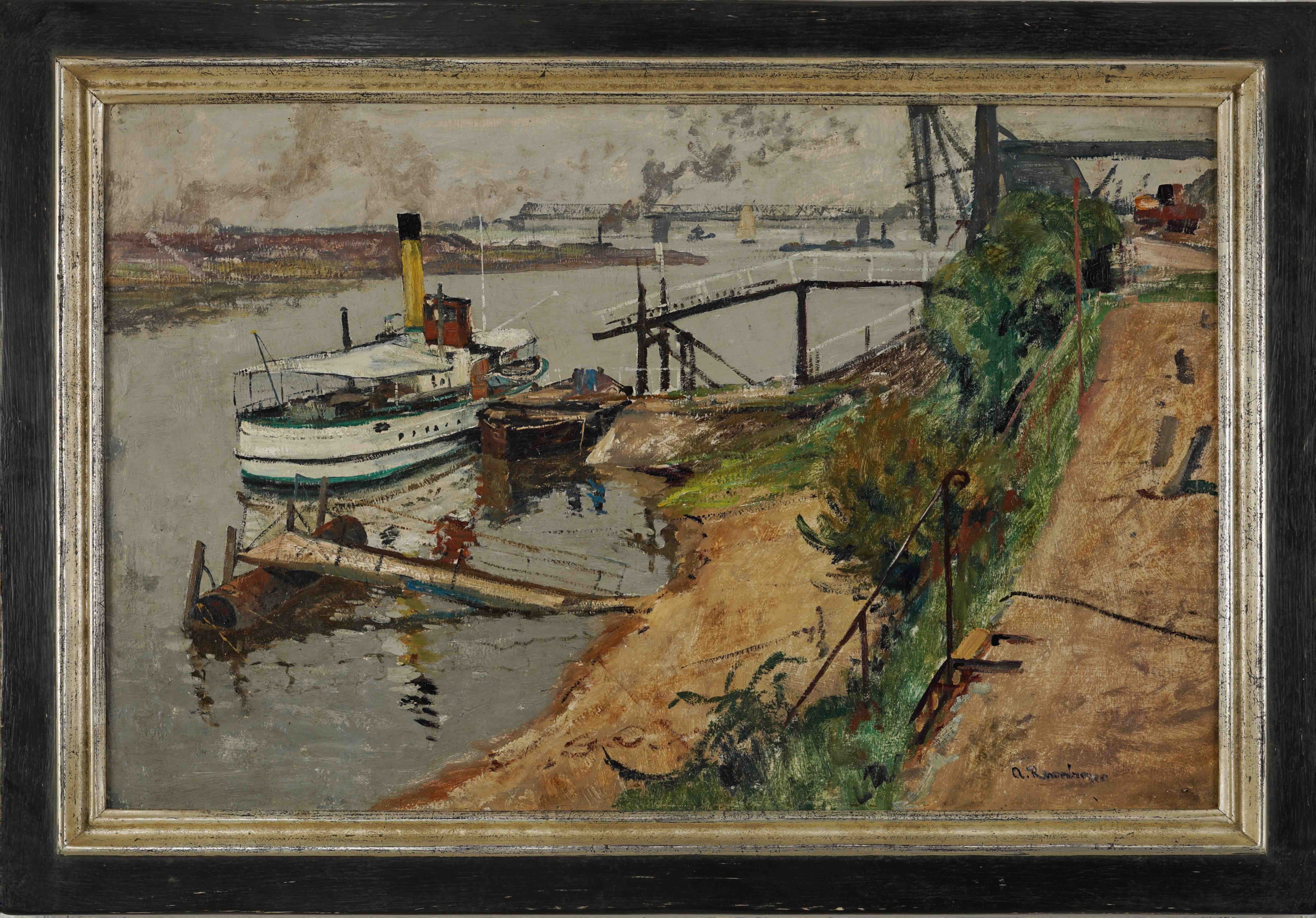
The scene depicts a Rhine riverbank with a steamboat and elements of port infrastructure, set within the industrial atmosphere of the interwar period. The composition is organised through a series of horizontal bands that lead the eye towards the river and the distant landscape beyond.
Rasenberger’s treatment of colour and landscape shows a visual affinity with nineteenth-century Pre-Raphaelite painting. Pre-Raphaelite landscapes were often characterised by brilliant colour, close observation, and a preference for ordinary natural settings rendered with unusual intensity. Their interest in what John Ruskin described as the close study of nature encouraged artists to give careful attention to places that might otherwise appear unremarkable. Rasenberger’s own training at the Düsseldorf Academy placed him within a different artistic tradition, but his landscapes share something of this concern with clarity, colour, and the close observation of the natural world. A useful comparison can be made with William Holman Hunt’s The Strayed Sheep at Tate Britain (Fig. 1). Both paintings employ a heightened range of greens, combining brighter and darker tones to give the landscape a strong chromatic presence. In Rasenberger’s work, however, the brushwork is broader and less exacting. The colour is saturated, but the surface remains visibly worked, creating a looser and more immediate effect than the highly detailed finish associated with Hunt. Rasenberger’s handling of form also recalls aspects of Symbolist landscape painting, particularly Ferdinand Hodler’s simplified contours and structural approach to composition. In The Grand Muveran at the Art Institute of Chicago (Fig. 2), Hodler uses clear outlines and broad areas of colour to organise the landscape. Rasenberger adopts a similarly firm treatment in details such as the steel handrail at the lower right and the smaller boat set beside the larger vessel. These elements help direct the viewer’s attention through the composition and give the scene a strong sense of spatial order. At closer range, however, the paint surface is much more fluid than the overall structure initially suggests. The clouds and distant mountain forms are built from fragmented passages of impasto, while other areas are handled with rougher, more open strokes. This contrast between clear composition and lively surface gives the painting much of its character, balancing descriptive realism with a freer, more modern treatment of paint.
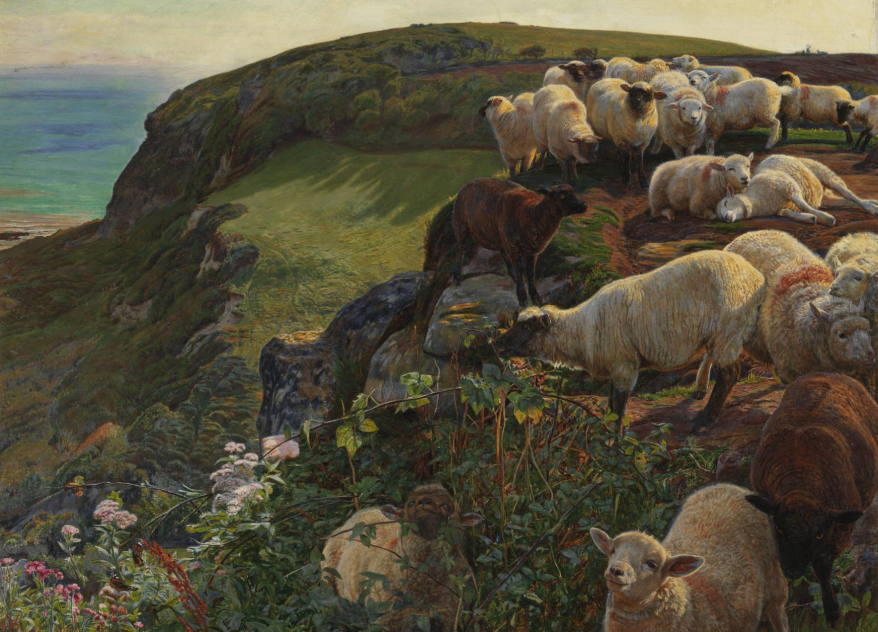
(Fig. 1) William Holman Hunt, Our English Coasts, 1852 ('Strayed Sheep'), 1852, oil on canvas, © Tate, London

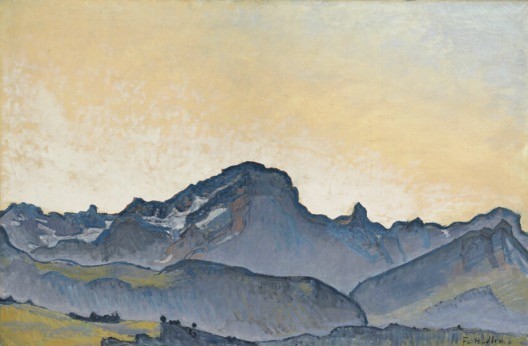
(Fig. 2) Ferdinand Hodler, The Grand Muveran, 1912, oil on canvas, © Art Institute of Chicago, Chicago
Alfred Rasenberger (1885–1949) was a German painter known particularly for his landscapes of the Rhineland and Lower Rhine. He trained at the Düsseldorf Art Academy under Eugen Dücker, an influential landscape painter and teacher, and developed his practice within the wider tradition of the Düsseldorf School. The Düsseldorf School had been one of the important centres of nineteenth-century European landscape painting, combining close observation of nature with carefully structured compositions and an interest in atmosphere and mood. Its influence extended beyond Germany, attracting international students and contributing to the development of landscape painting in both Europe and the United States. Working within this tradition, Rasenberger was particularly drawn to the quieter character of the Lower Rhine landscape. Rivers, villages, farmhouses, winter trees, and changing seasonal light recur throughout his work. His paintings often favour subdued subjects and familiar places, relying on colour and atmosphere rather than dramatic scenery for their effect. Rasenberger was also a member of the Düsseldorf artists’ association Malkasten and worked within the same regional artistic environment as painters such as Gregor von Bochmann. His landscapes remain closely connected to the visual character of northern Germany, recording its countryside and waterways with particular sensitivity to season, weather, and changing light.



 CN
CN