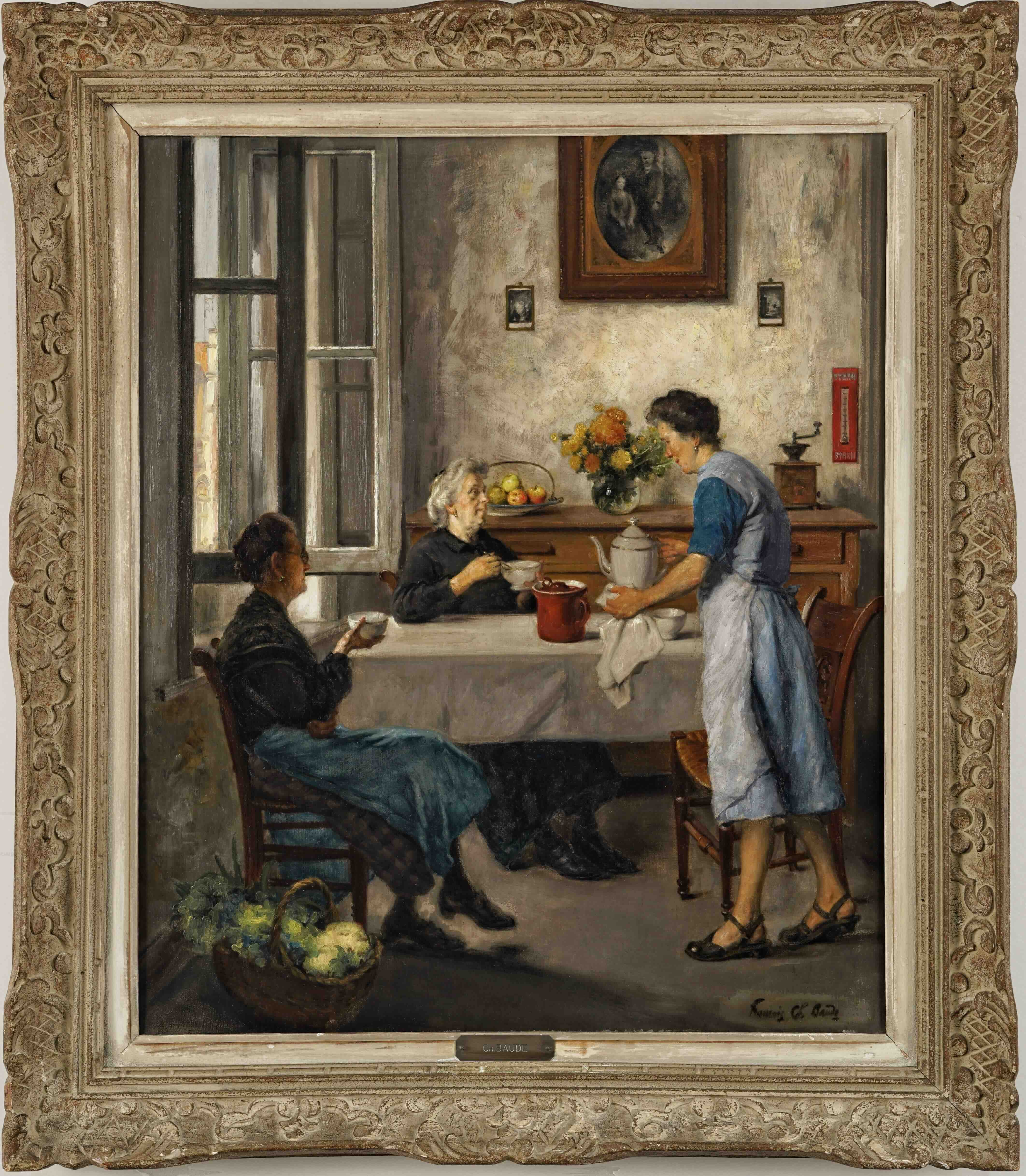
Medium: Oil on canvas
Dimensions: 65 x 54 cm
Signature: Signed lower right
Period of execution: c. 1880-1953
Price: ¥ 39,600
This painting depicts a simple domestic scene in which three women gather around a table for lunch in a modest interior filled with natural light. The white soup tureen, flowers arranged on the dresser, and basket of vegetables in the foreground introduce small but carefully observed details, giving the composition a warm and lived-in character. Beaude approaches the subject with clarity and restraint, allowing the quiet rhythm of everyday life to become the focus of the scene. His style reflects the continued influence of nineteenth-century French academic painting, particularly in the careful modelling of figures and the controlled treatment of light. A connection can be drawn with artists such as William-Adolphe Bouguereau, whose polished technique and interest in classical composition remained highly influential. Beaude, however, works with a warmer and more varied palette, bringing greater emphasis to atmosphere and the effects of natural light. This interest in light also places his work in dialogue with the broader developments of French landscape and genre painting during the later nineteenth century. While his technique remains grounded in academic practice, the softer illumination and fresher colour relationships suggest an awareness of the more direct observation associated with the Barbizon tradition and plein air painting. The result is a style that combines academic discipline with a more immediate treatment of colour and light, giving familiar domestic subjects a sense of warmth and quiet vitality.
François Charles Beaude pursued his artistic education at the prestigious École des Beaux-Arts in Paris, where he studied under the renowned painter William-Adolphe Bouguereau. Bouguereau was a prominent figure in the 19th-century French academic art. He was known for his mythological and allegorical scenes, particularly for his modern improvisation of Botticelli’s The Birth of Venus (Fig. 1). His paintings gained recognition at the Salon des Artistes Français beginning in 1908, earning him a silver medal and subsequently a gold medal in 1911. Following these accolades, Beaude received the distinguished honour of hors concours status at the academy, a privilege he has maintained ever since. In 1912, he was awarded a prestigious travel grant that enabled him to exhibit his works across major European cultural centres, including Lille, Ghent, Amsterdam, and Brussels.
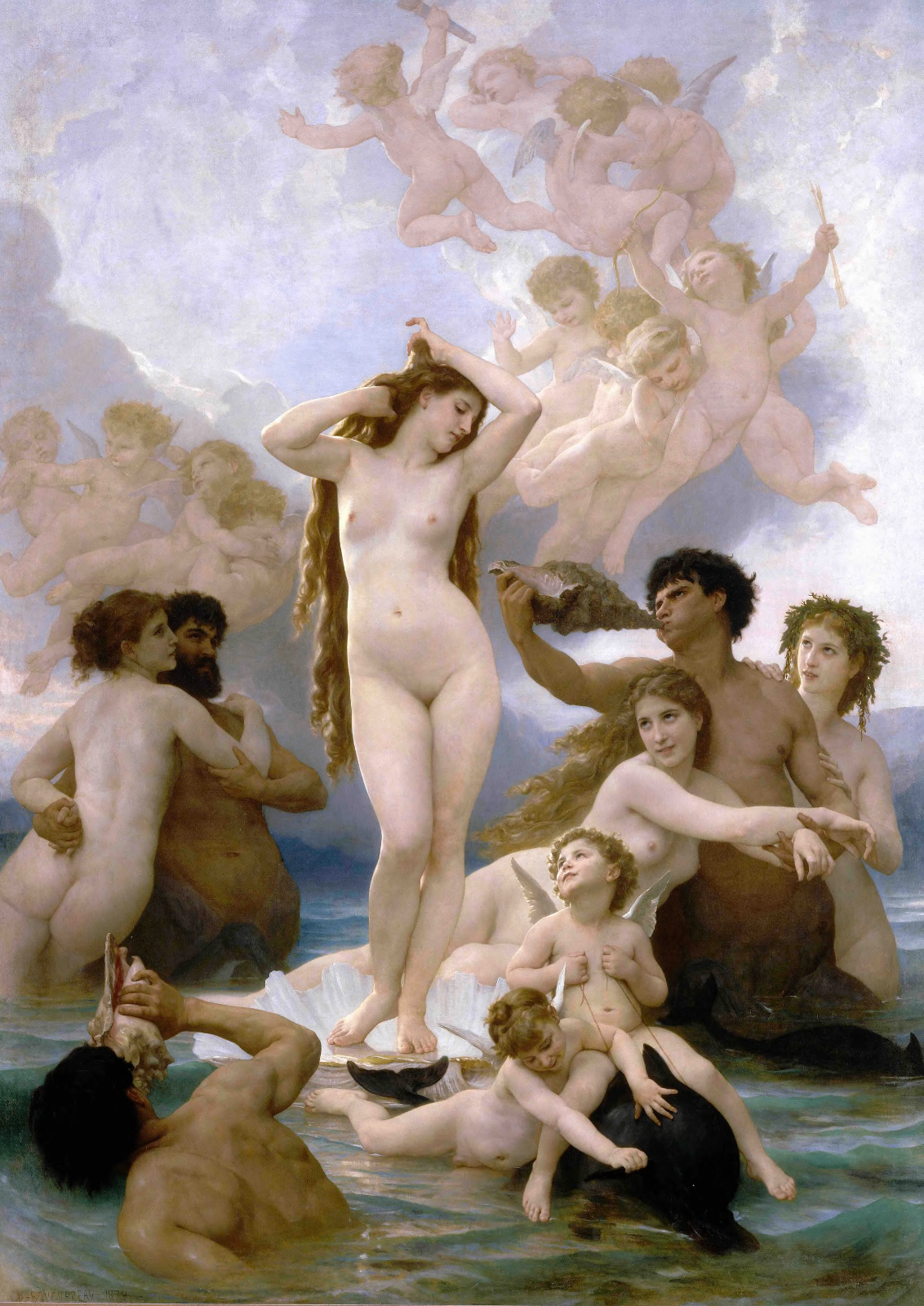
(Fig. 1) William-Adolphe Bouguereau, The Birth of Venus, 1879, oil on canvas, Musée d'Orsay, Paris



 CN
CN