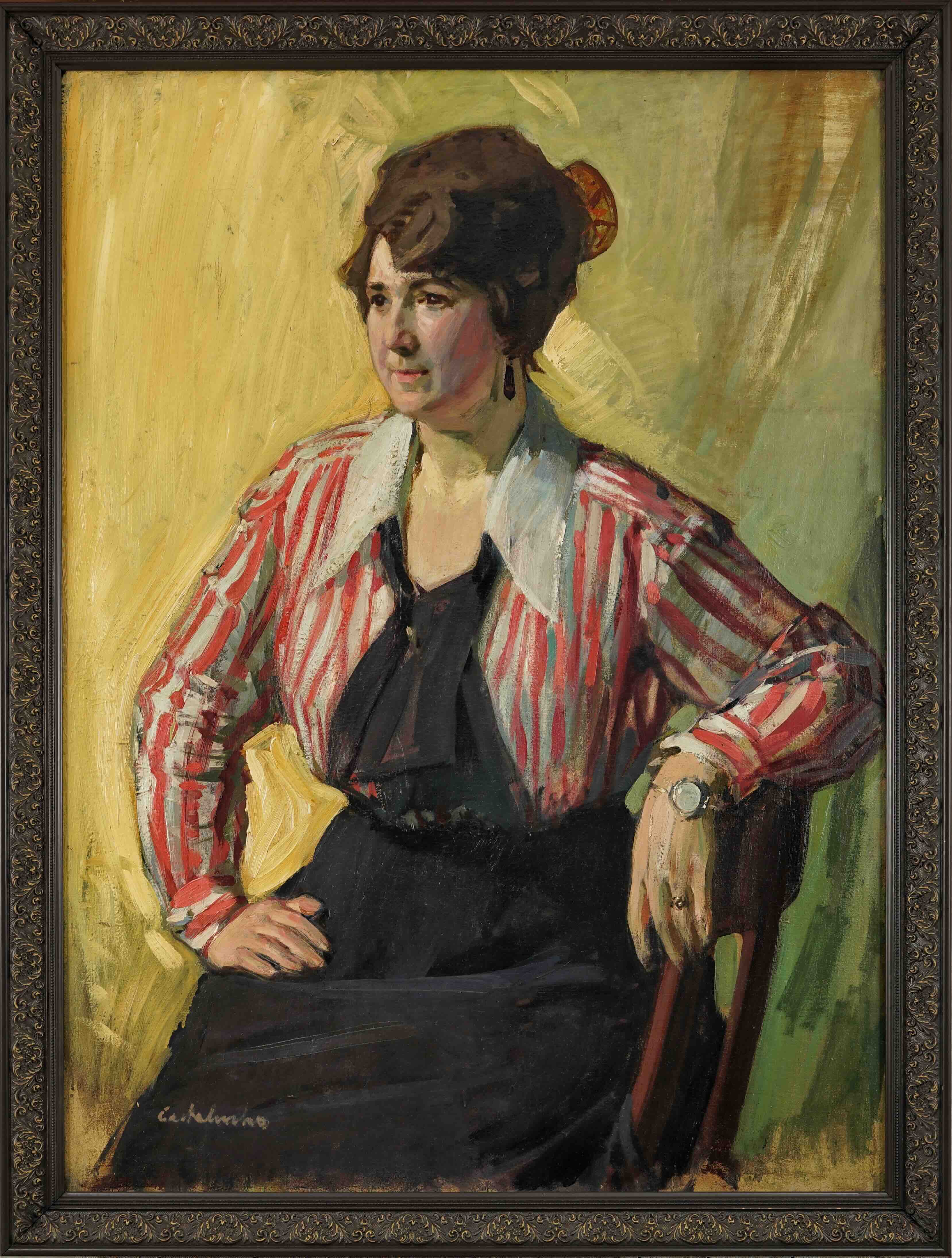
Medium: Oil on canvas
Dimensions: 101 x 72 cm
Signature: Signed lower left
Period of execution: c. 1870-1927
Price: ¥ 28,300
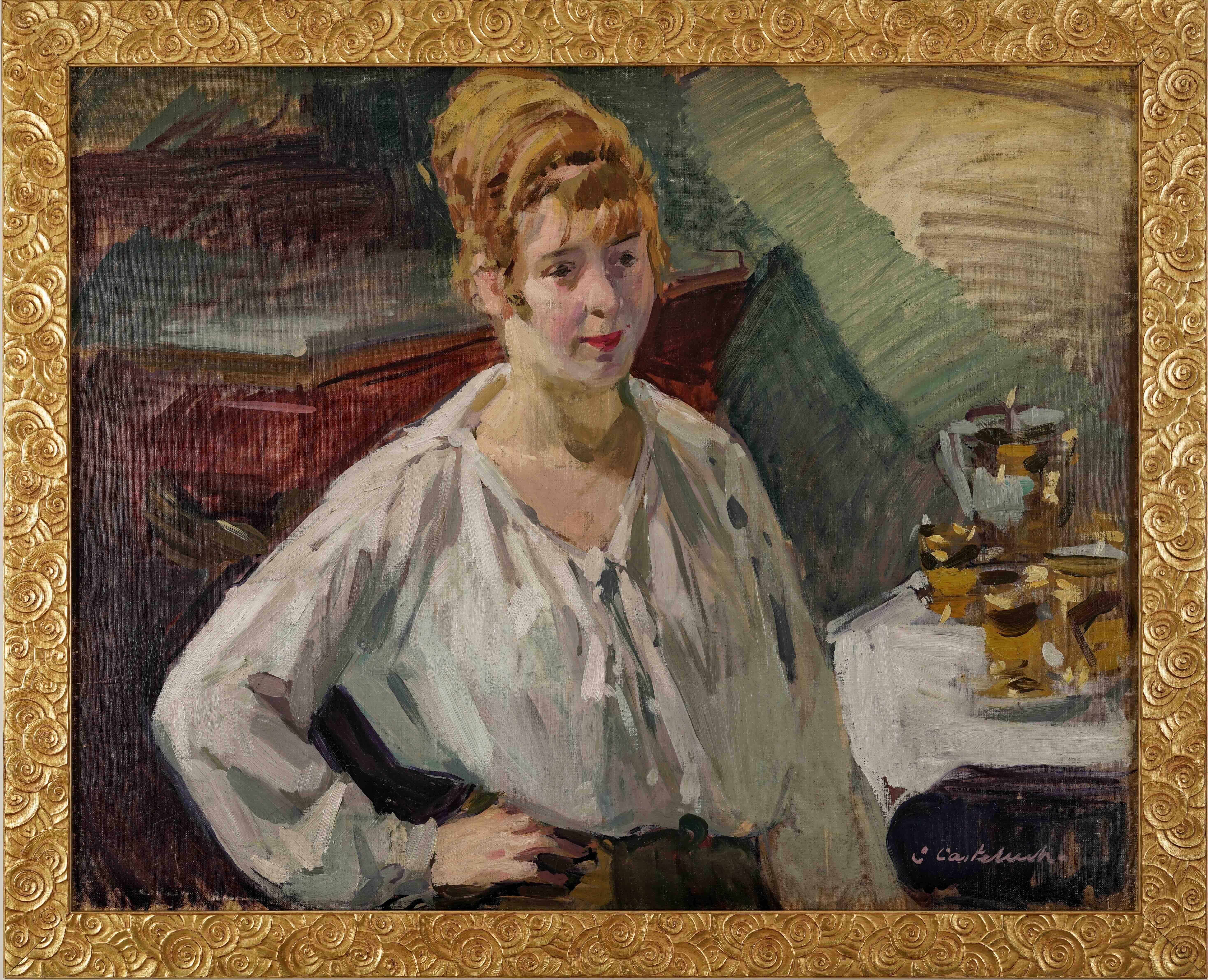
This portrait, probably painted around 1925, depicts a young woman seated in an armchair, her gaze directed beyond the frame. The pose gives the sitter a composed and self-possessed presence. Such three-quarter portrait formats have a long history in European painting, particularly in Renaissance representations of social status and individual character. Claudio adapts this established convention to a modern bourgeois sitter, presenting her with a similar sense of dignity and composure. Her red-striped blouse, dark dress, wristwatch, and ring place her firmly within the fashions and material culture of the early twentieth century. Claudio’s treatment of the figure also recalls the portrait studies of Jean-Baptiste-Camille Corot. Although best known for his landscapes, Corot produced a number of portraits distinguished by their quiet mood and direct handling of paint. A useful comparison can be made with his Italian Woman in the National Gallery, London (Fig. 1). In both works, the face is constructed through relatively broad, fluid touches, with thicker passages around the cheeks and smaller accents of paint defining the nose, eyes, and highlights of the skin. This visible brushwork preserves a sense of immediacy while remaining closely attentive to the sitter’s features. Claudio’s palette, however, is softer and more varied. Ochre and earthy undertones are combined with cooler colours, giving the portrait a subdued atmosphere. The striped blouse provides the principal area of visual interest: its vertical strokes follow the shape of the body and emphasise the fall of the fabric. What initially appears to be white is in fact composed of pale blues, greens, and yellows, colours that recur in the surrounding background and help integrate the figure into the composition. Through this combination of careful observation, visible brushwork, and subtle colour, Claudio brings a modern sensibility to a traditional portrait format. The sitter remains formally posed, yet the loose handling and chromatic variation give the image a quieter and more immediate character.
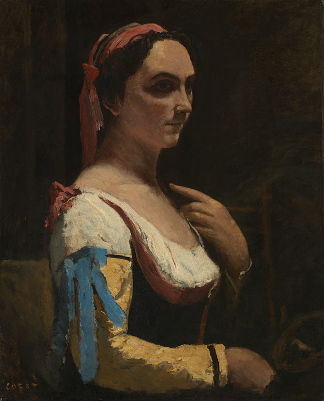
(Fig. 1) Jean-Baptiste-Camille Corot, Italian Woman, 1870, oil on canvas, © The National Gallery, London
Claudio Castelucho y Diana (1870–1927) was a Catalan painter, sculptor, and teacher who established much of his career in Paris. Born in Barcelona, he showed an early aptitude for art and began exhibiting while still a young man. His work was accepted at the Paris Salon in 1897, marking an important step in his development within the French art world. Castelucho became particularly known for paintings of Spanish figures and subjects, drawing repeatedly on the visual culture of his native country. These works allowed him to combine his Spanish background with the artistic language he encountered in Paris, where he spent much of his professional life. Teaching also formed an important part of his career. In 1905, Castelucho joined the faculty of the Académie de la Grande Chaumière, established by Alice Dannenberg and Martha Stettler as an alternative to the more formal teaching methods of the École des Beaux-Arts. The academy encouraged a freer approach to artistic training, placing greater emphasis on individual development and direct study from the model. It later attracted an international community of artists, including Louise Bourgeois, Alexander Calder, Isamu Noguchi, and Alberto Giacometti. Castelucho’s association with the Académie de la Grande Chaumière places him within an important moment in the development of modern art education in Paris. His career brought together traditional training, portraiture, and teaching at a time when younger artists were increasingly moving beyond established academic conventions.



 CN
CN