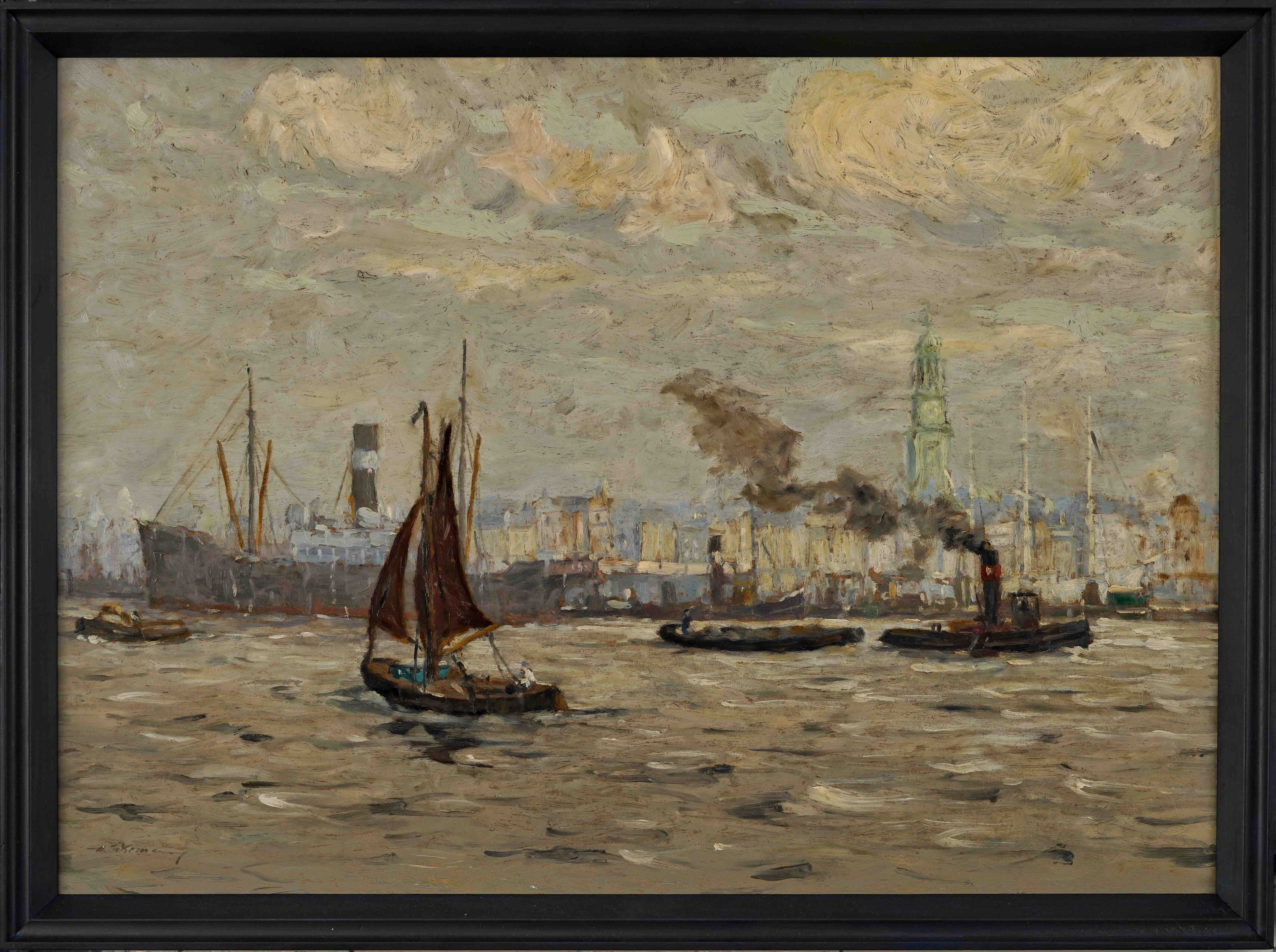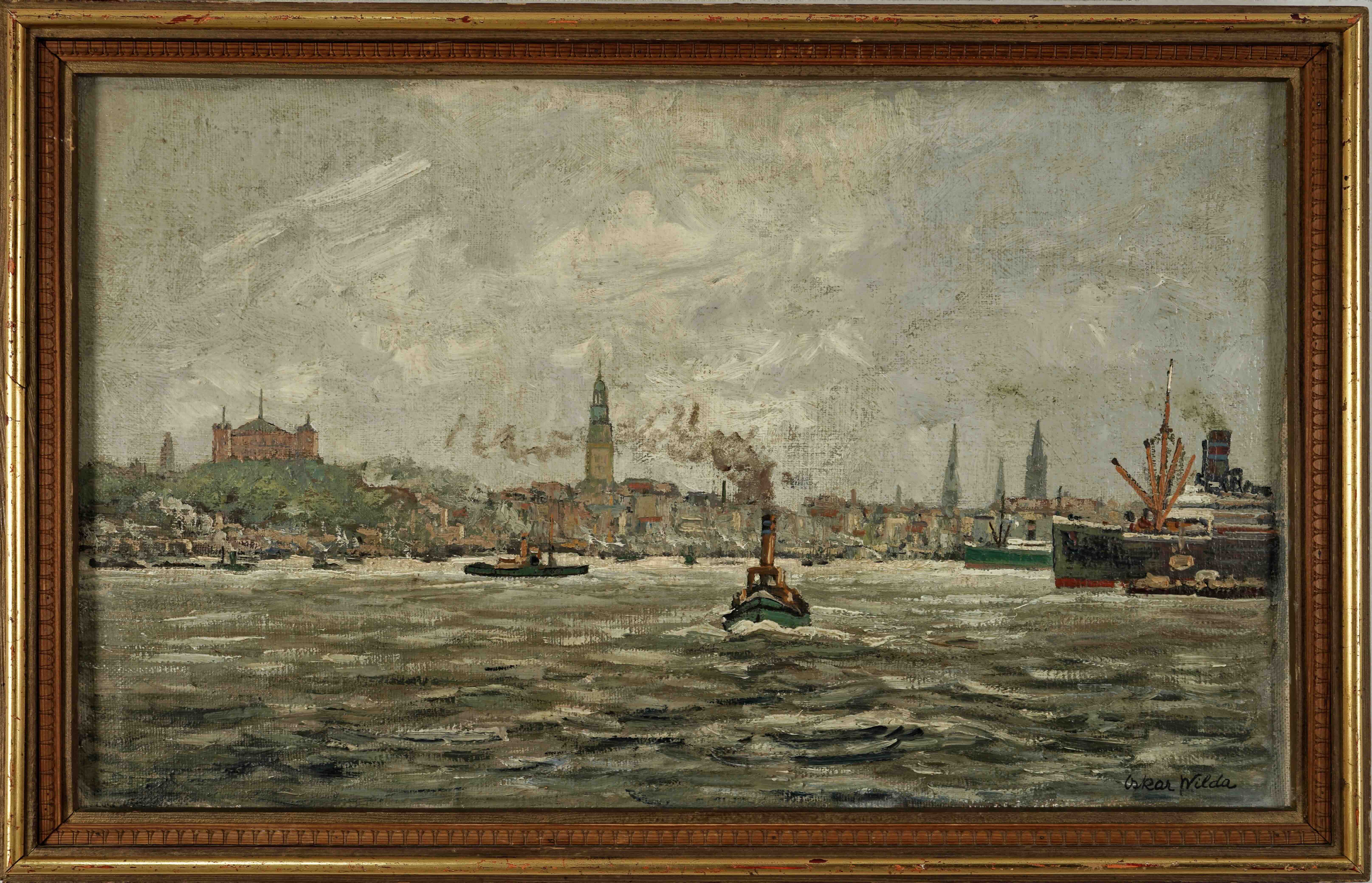
Medium: Oil on hard fibre
Dimensions: 40 x 65 cm
Signature: Signed lower right
Period of execution: c. 1886-1956
Price: ¥ 18,700
This view of Hamburg captures the activity of Germany’s major port during a period of rapid urban and industrial expansion. The composition unfolds horizontally, with the city skyline marked by church spires and industrial structures in the distance, while ships and smaller vessels animate the water in the foreground. Smoke rising from steamships and factories further contributes to the sense of movement and activity across the harbour. Wilda works with a restrained palette of greys, muted greens, and earthy browns, well suited to the damp atmosphere and subdued northern light of the port. Smoke, mist, and water seem to merge across the composition, softening the distinction between individual forms and giving the scene a strong atmospheric unity. Rather than describing every vessel or building in detail, Wilda concentrates on the broader impression of a working harbour shaped by industry, traffic, and changing weather. His handling of smoke and water recalls the Impressionists’ interest in modern industrial subjects, particularly Claude Monet’s Gare Saint-Lazare series (Fig. 1). Like Monet, Wilda uses loose, broken brushwork and thicker passages of paint to suggest forms that are continually shifting: steam disperses into the sky, reflections break across the water, and distant architecture is partially obscured by haze. Wilda’s palette, however, remains darker and more earthy, giving the harbour a heavier and more distinctly northern atmosphere. Through this combination of loose brushwork, restricted colour, and atmospheric effects, Wilda presents Hamburg not simply as a recognisable cityscape but as a modern working port, where water, architecture, shipping, and industrial smoke become part of the same constantly changing environment.
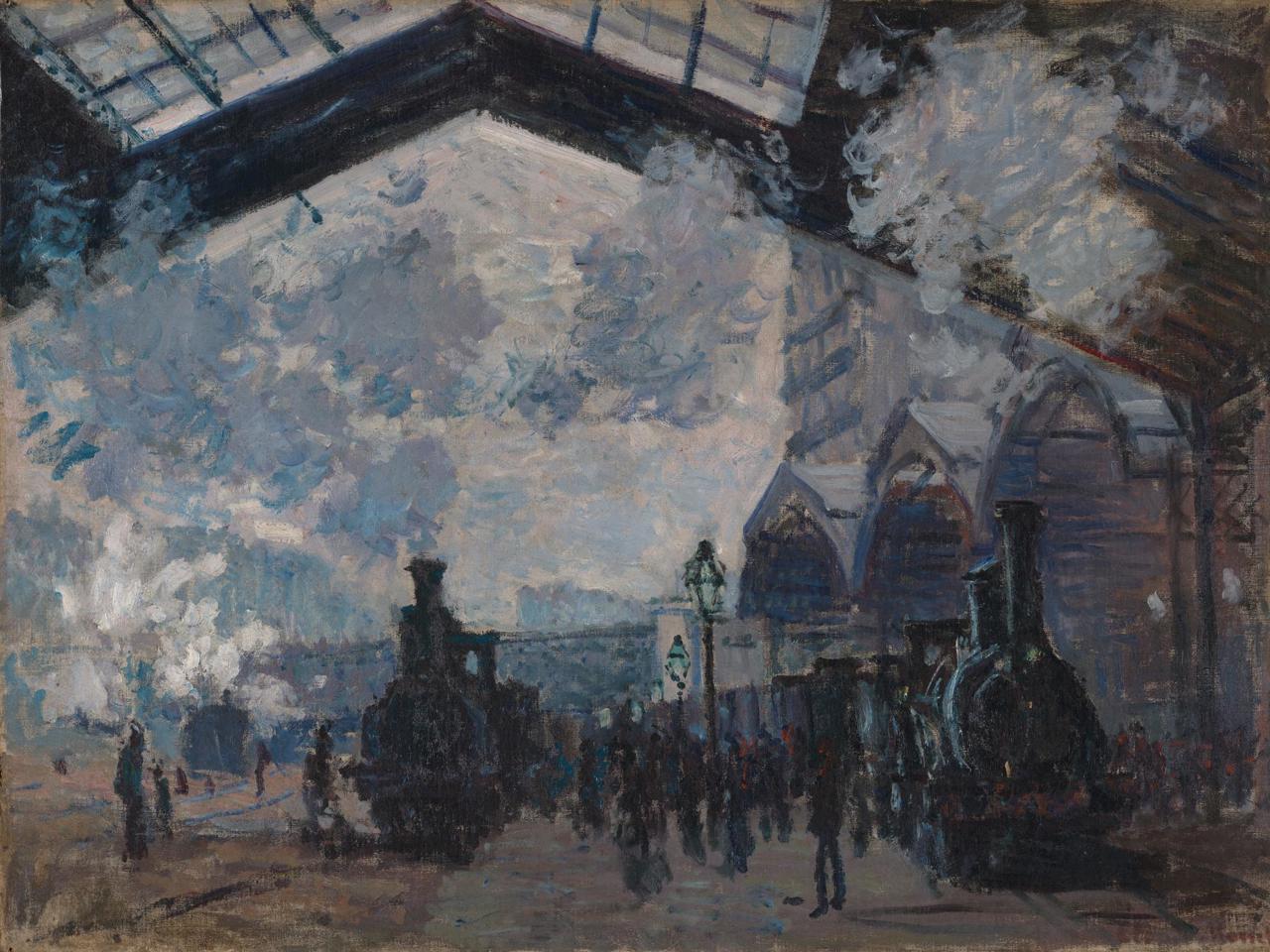
(Fig. 1) Claude Monet, The Gare Saint-Lazare, 1877, oil on canvas, © The National Gallery, London
Oskar Wilda (1886–1958) was a German painter whose career was closely associated with northern Germany. Born in Dresden, he developed a body of work focused particularly on urban views, harbour scenes, and maritime subjects. Wilda’s paintings reflect the influence of Impressionism and early twentieth-century modern painting, especially in their attention to changing light, weather, and atmosphere. Coastal and industrial settings recur throughout his work, with particular emphasis on the movement of water, the structure of port architecture, and the everyday activity of maritime life. His style combines loose, atmospheric brushwork with a clear sense of composition. Rather than concentrating on precise topographical detail, Wilda often uses restrained colour and simplified forms to capture the overall character of a place. His work remained largely regional in reputation, but it offers a distinctive view of the modern northern European city and harbour landscape.



 CN
CN