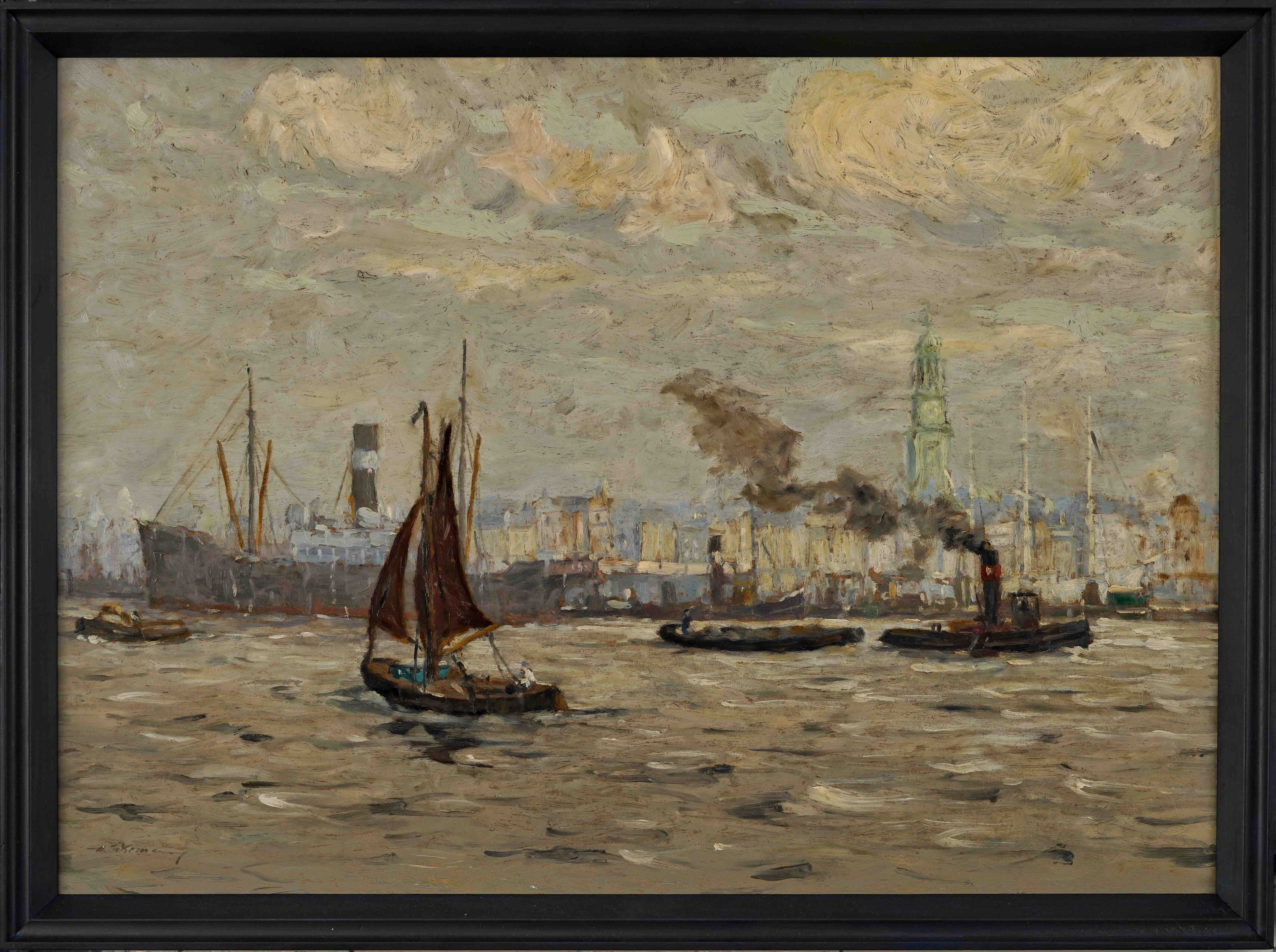
Medium: Oil on panel
Dimensions: 56 x 78 cm
Signature: Illegibly signed "H. Eck(…)" ;
label of the Hamburg art dealer "Gustav Klose jr."
Period of execution: Mid 20th century
Price: ¥ 22,100
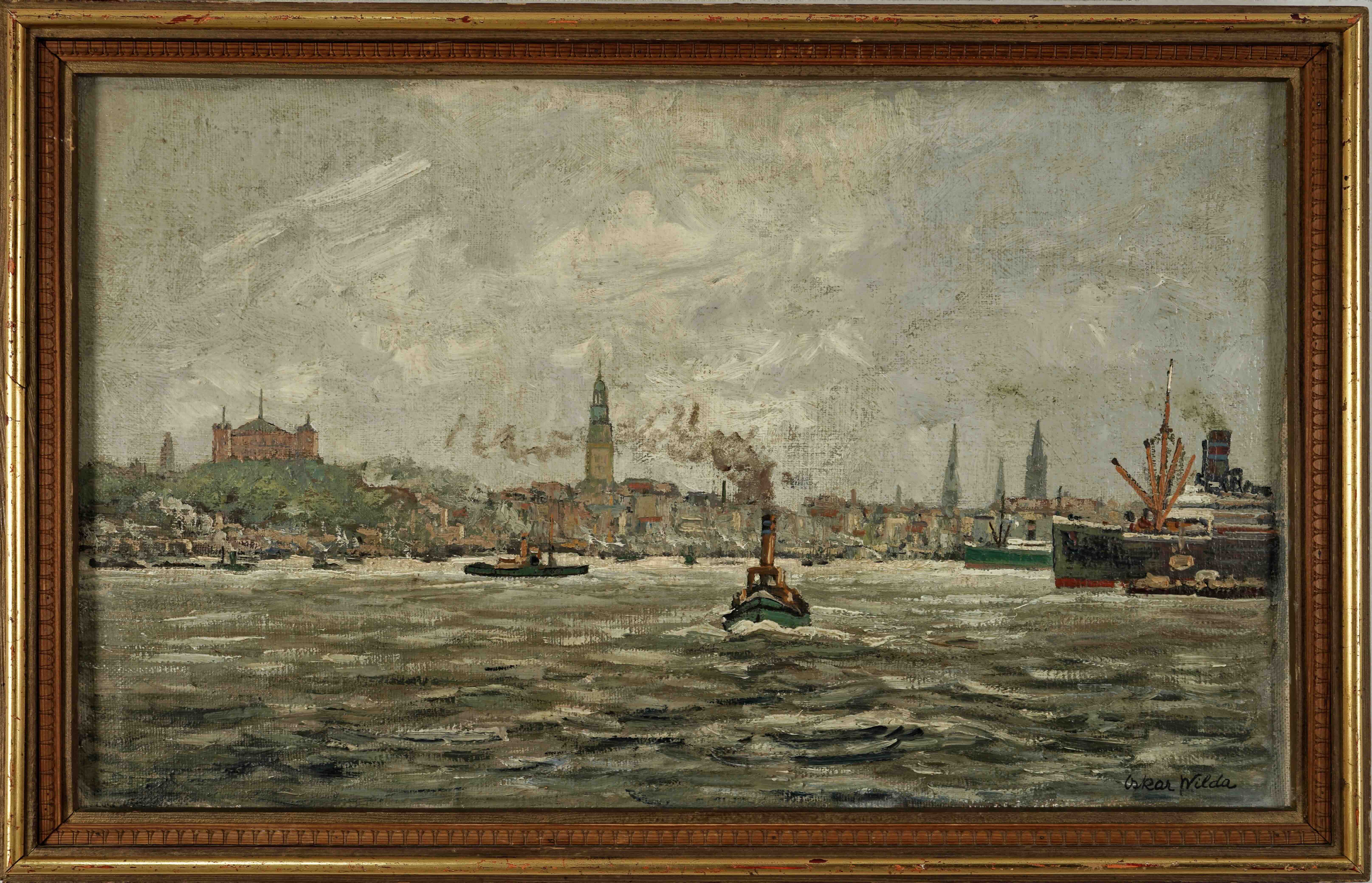
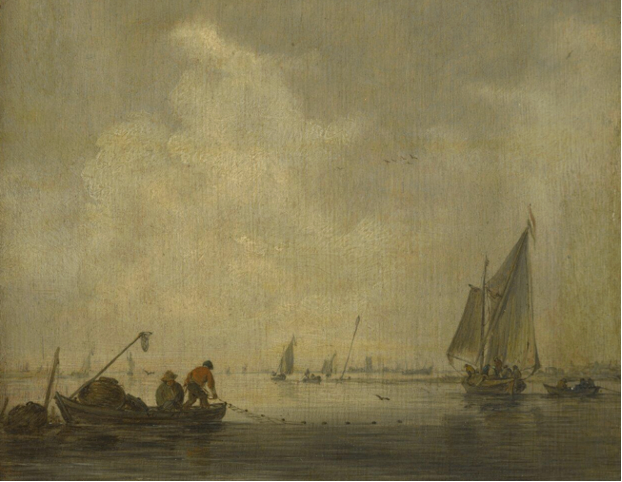
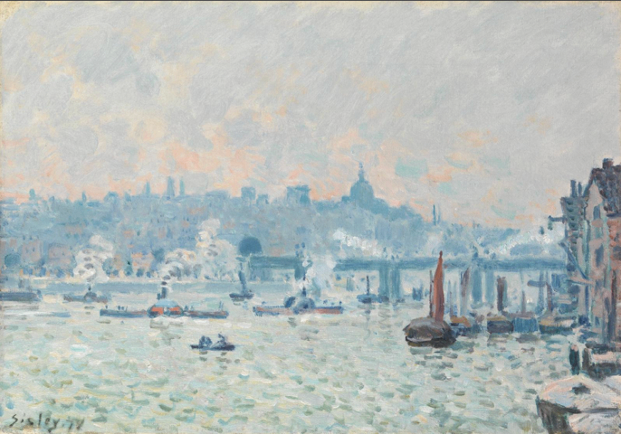
This marine landscape depicts a busy stretch of the Elbe River, with sailing vessels and steamers moving through misty water beneath a broad, cloud-filled sky. The recognizable silhouette of St. Michael’s Church in the distance identifies the setting as Hamburg and gives the composition a clear sense of place. The painter works with loose, broadly applied brushstrokes and areas of visible impasto, particularly in the sky and water. Rather than describing each vessel or building in precise detail, forms are softened by mist and industrial haze. This gives the scene an atmospheric quality closely associated with Impressionist approaches to changing light and weather. The palette is restrained, dominated by browns, greys, and muted greens that suit the subdued northern light of the port. In this respect, the work recalls seventeenth-century Dutch marine painting, particularly Jan van Goyen’s A River Scene, with Fishermen Laying a Net in the National Gallery, London (Fig. 1). Both paintings rely on a limited range of earth colours and silvery greys to create a sense of damp air and broad open space. The handling of paint, however, is considerably freer. A useful comparison can be made with Alfred Sisley’s View of the Thames: Charing Cross Bridge in the National Gallery, London (Fig. 2), where river, architecture, and smoke are similarly softened by atmospheric conditions. Here, broken brushwork and shifting tonal passages allow ships and buildings to emerge gradually from the haze rather than being sharply outlined. The painting therefore combines a restrained marine palette rooted in an older Dutch tradition with a looser, more immediate treatment of light and atmosphere. This balance between tonal control and fluid brushwork gives the Hamburg harbour scene both historical continuity and a distinctly modern character.
The attribution of this work remains uncertain. The signature visible in the lower left corner reads "H. Eck[…]," with the surname partially illegible or abbreviated. This suggests the hand of a relatively obscure painter, possibly working within the German Impressionist tradition during the mid-twentieth century. Stylistically, the work bears affinities with artists such as Ernst Eitner or Friedrich Kallmorgen, who were known for their atmospheric coastal scenes and plein-air sensibility, though this painter appears not to have achieved comparable recognition or critical attention.



 CN
CN